
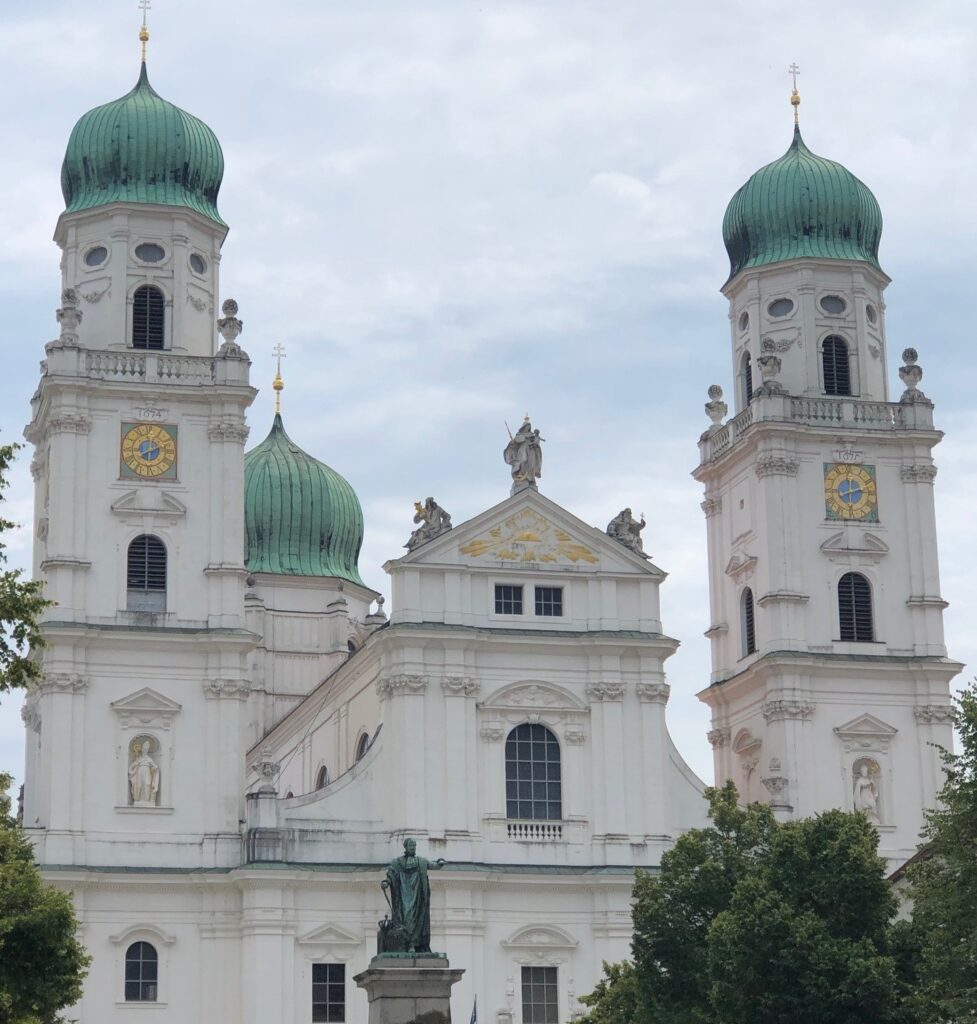
After boarding our new ship, the Vali, in Passau, we were moored there for a couple of nights and there was an excursion back up the river to the town of Regensburg, where we would have stopped if the river had been passable. It was a good 3 hour coach ride in each direction and we were both a bit under the weather so we opted to skip that trip. I popped into the town with one of the other passengers who had decided to do the same thing, and the following day we roamed around together. We didn’t do the official tour so we did miss one thing – apparently the beautiful baroque St. Stephen’s Cathedral houses one of the largest pipe organs in Europe – you can see photos on the internet if interested!
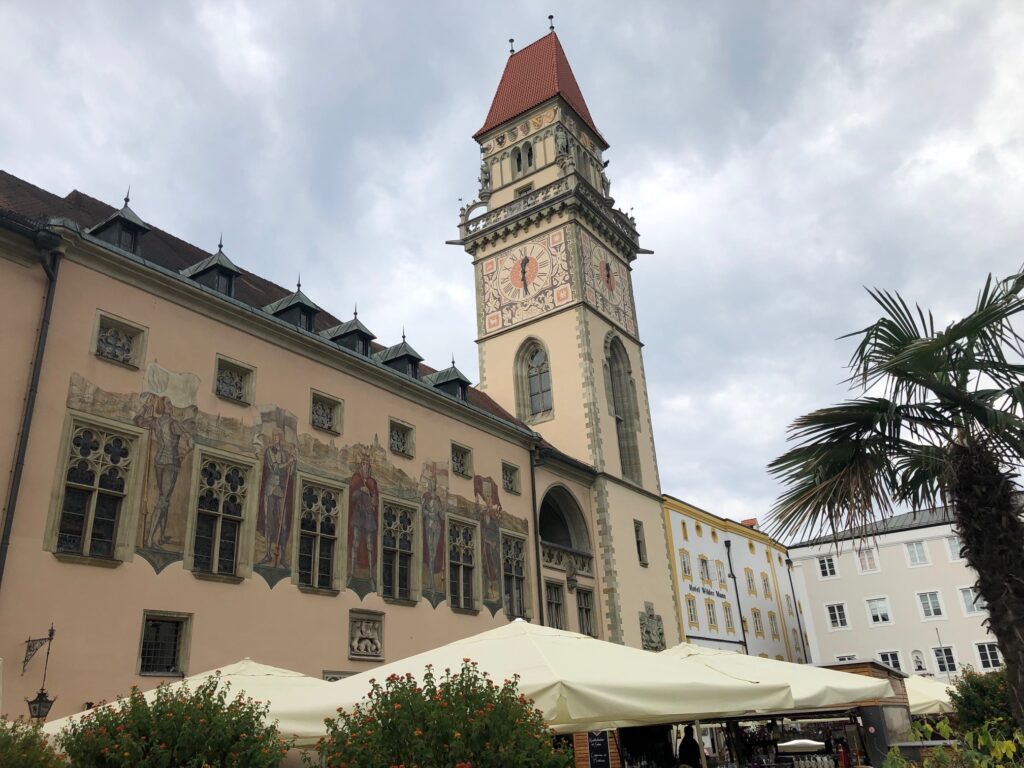
Passau is a largely baroque town, rebuilt in the 17th century following a series of devasting fires. It is located on a steep peninsula where the Danube is joined by the River Inn and much smaller River Ils.
Together with my new American friend Kim, we wandered into the main square and then explored some side streets. She was shopping for some local embroidery for Christmas – it was July, but you can still find it as it’s a local speciality. I ended up with a table runner and a couple of matching cushion covers, very traditional and very beautiful.

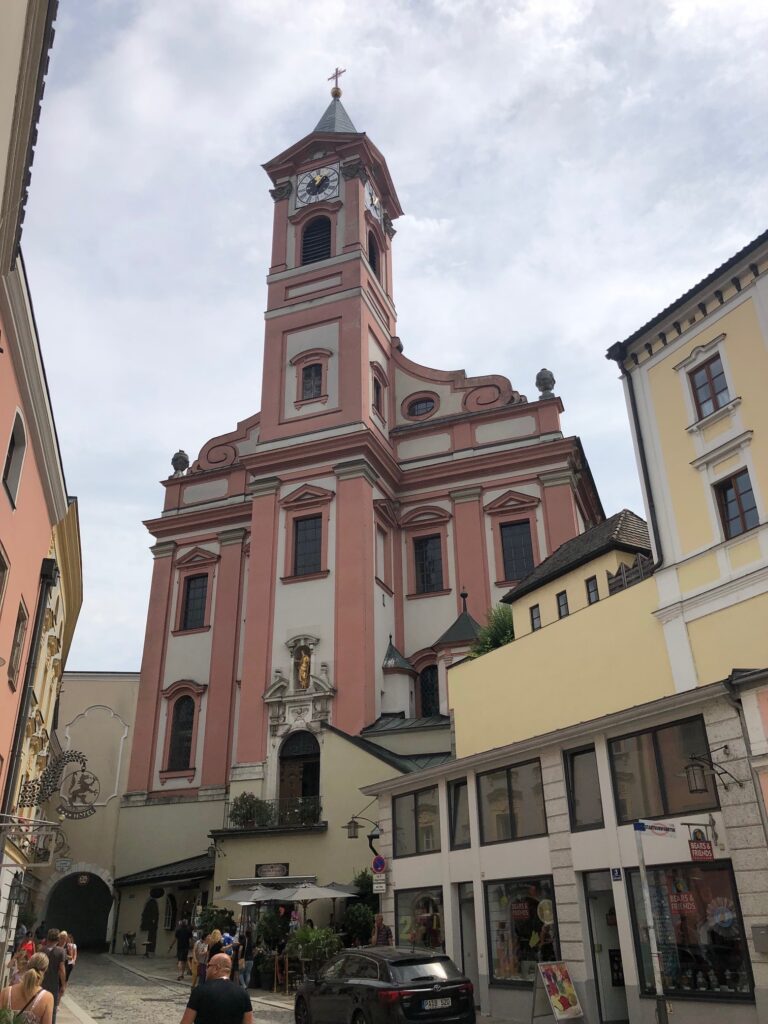


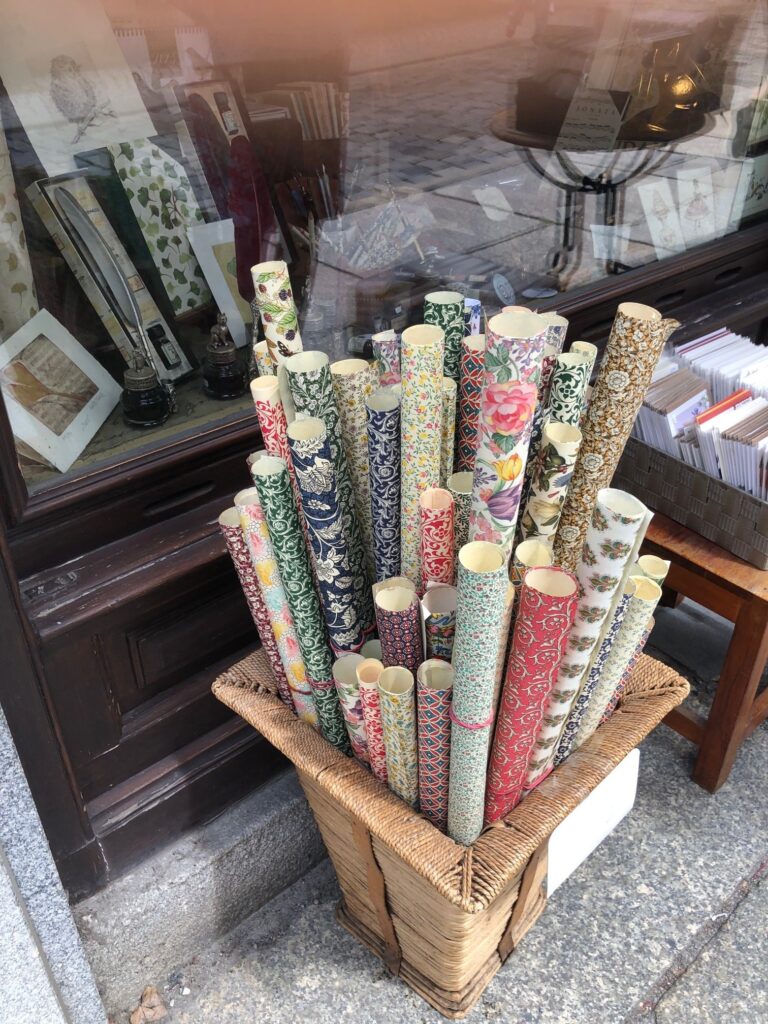
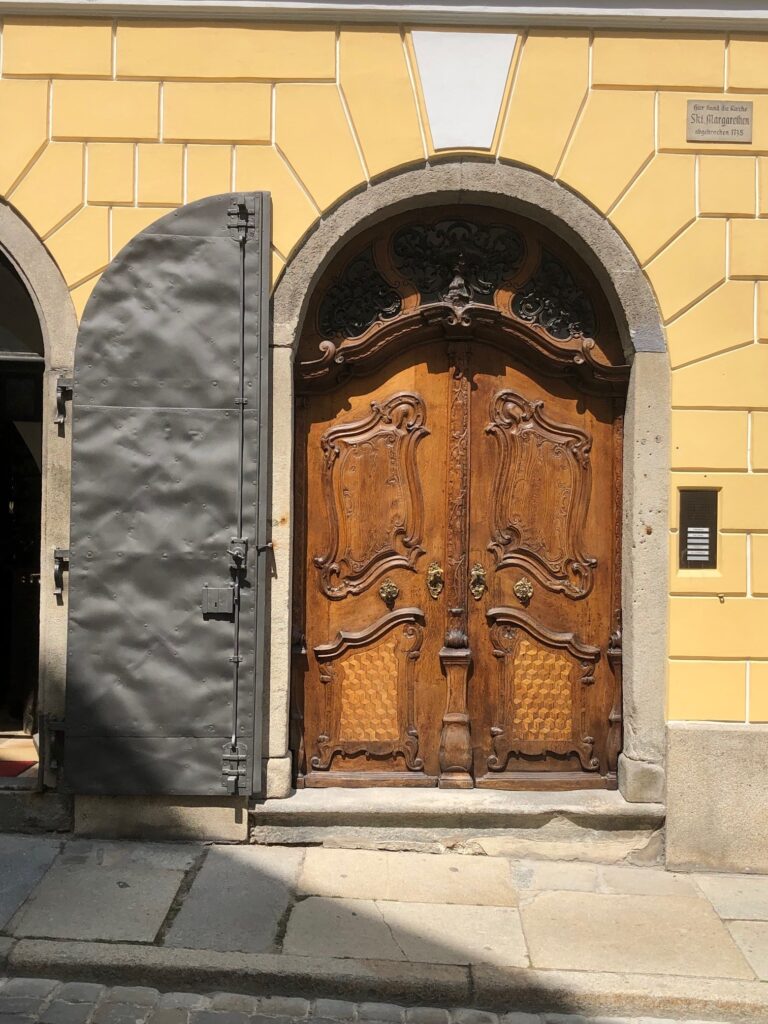
After that we split up and I walked across the bridge and up the hill on the opposite side to view the Veste Niederhaus and Vest Oberhaus.


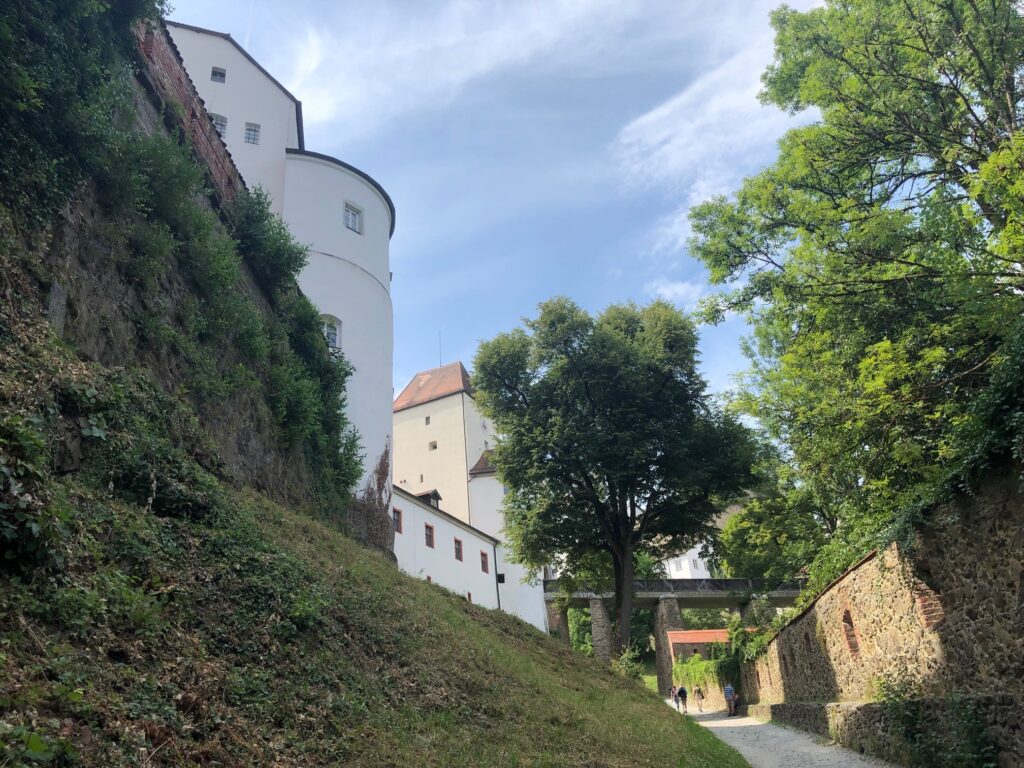
The Veste Niederhaus – nieder meaning lower – dates from the 14th century, while the Oberhaus – ober meaning over or high – is mediaeval. The original was built by the Bishop of Passau to emphasize his authority over the city and the later additions continued the tradition.

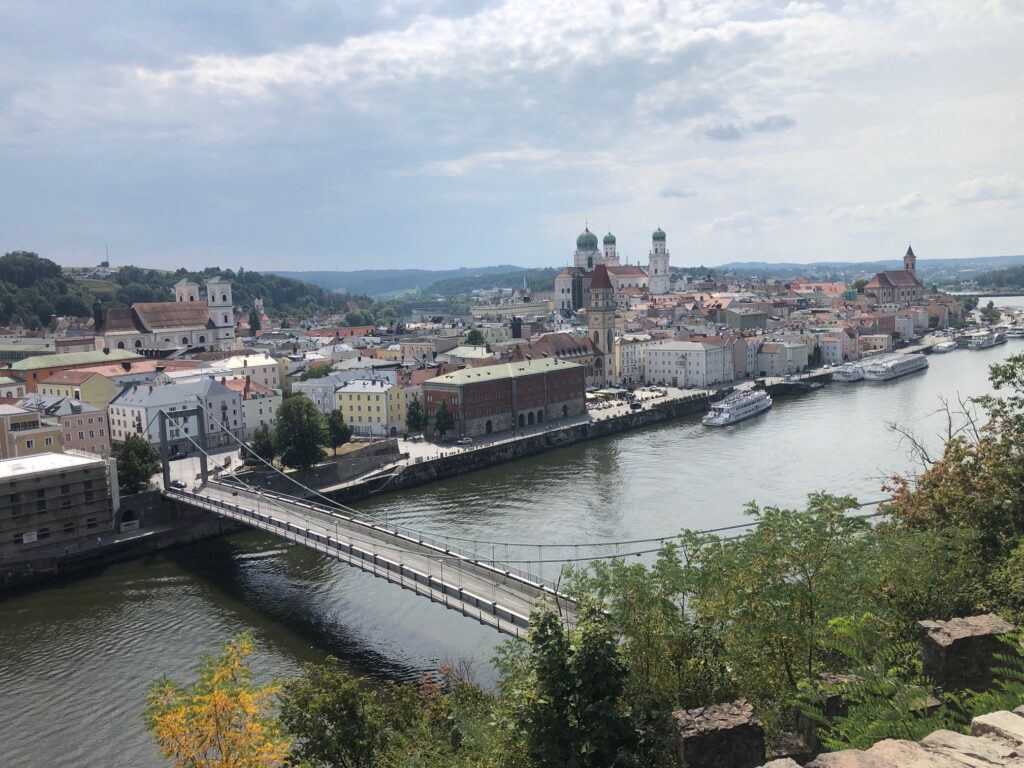
The following day I went back into the town with B as until then he hadn’t seen anything of it other than from the ship, and we were due to leave later that afternoon. I found it to be a very beautiful place with a nice laid back atmosphere and is on a smaller scale than many of the cities we visited, despite the size of some of the buildings, which I much prefer.
Interestingly our Viking Daily News advises that it is widely believed that the author of the “Nibelungenleid” comes from Passau, though nobody knows for sure who it was. Part of this is the story you might have come across as a child, as I did, known as the Legend of Siegfried, or Siegfried and the Dragon. It’s a typical story of Kings, Queens, a Prince vanquishing a dragon, invincibility and finally betrayal and death when his own Achilles heel is discovered so he can be murdered. On a larger scale the Nibelung was the Burgundian court and the story of this is told, ending with its defeat by Attila the Hun.
Richard Wagner, the famous composer, used this saga as inspiration for his opera – or I should say series of 4 operas – called The Ring of the Nibelung.
So, with the truncated history lesson over, I can tell you that after our visit to Passau, the ship left its mooring late in the afternoon and executed an interesting 180 degree turn in the confluence of the Danube and the Inn so that it was pointing downriver (having come up to meet us) and we continued over the German-Austrian border to our next destination, Melk Abbey.
That evening we I went to the bar for the “Quiz with a Twist”. This was great fun – another triumph for Kane! It was a series of quick fire questions which have more in common with the jokes and facts you find in Christmas crackers than with so called General Knowledge. He gave us a print out at the end in case any of us wanted to use it elsewhere – with the proviso that you only allow a couple of minutes between questions, 5 minutes at the end to think, and no repeats at the end. I just read it again, its silly, but nevertheless very funny, especially after the odd cocktail 😉
