
Earlier this year we joined the Franco British Network, an organisation based in Perigord which has been created primarily to assist anyone in the region with their applications for residency.
Something which is not apparent until you actually want to live here full time is just how horrendous the labyrinth of paperwork you have to negotiate is here. Its true of all aspects of life – from 5-10 pages to buy a garage door motor to 30 pages to open a bank account. However in those cases they give you the paperwork – to get cars registered and apply for residency you have to supply them with another rainforest.
I digress. This same organisation also puts on social events from time to time, and the first one this year following confinement was a trip to Neuvic sur l’Ilse to visit a sturgeon farm and taste their caviar. Why not, we thought.
I should now point out that neither of us are huge fans of this delicacy, although there was a moment in Hamburg when we were at a Russian hosted party and they brought out vodka and caviar – both in prodigious quantities. However, this was at the end of the evening following multiple glasses of champagne and then dinner accompanied by freely flowing red wine. So by the time the vodka/caviar combo turned up anything was going to taste good! I recall that standing up from the table after that was a bit of a challenge and we then paid the Uber taxi twice…
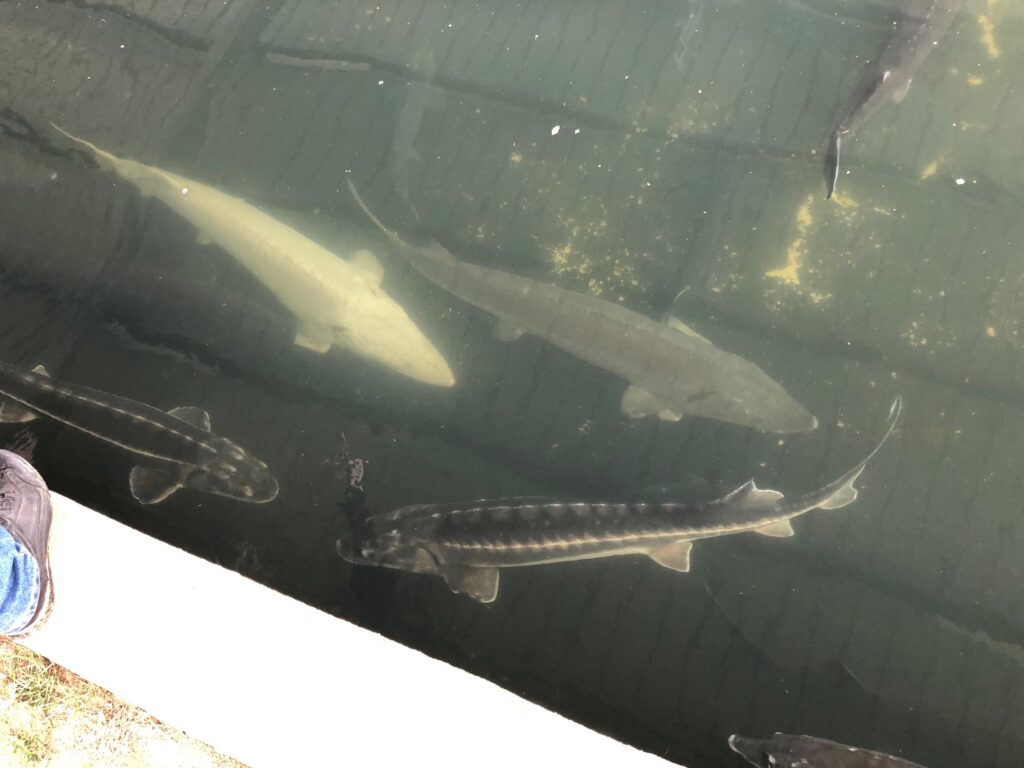
Back to the Dordogne version. At Caviar de Neuvic they gave us a tour of the premises first, during which we learned that there are many varieties of sturgeon and most get to be very large indeed. It takes 7 years before the females produce eggs and they are easily stressed which is critical as they will then reabsorb the eggs so you have to wait another year. As a result you only get near the males during the tour – a few are kept for breeding and this purpose.
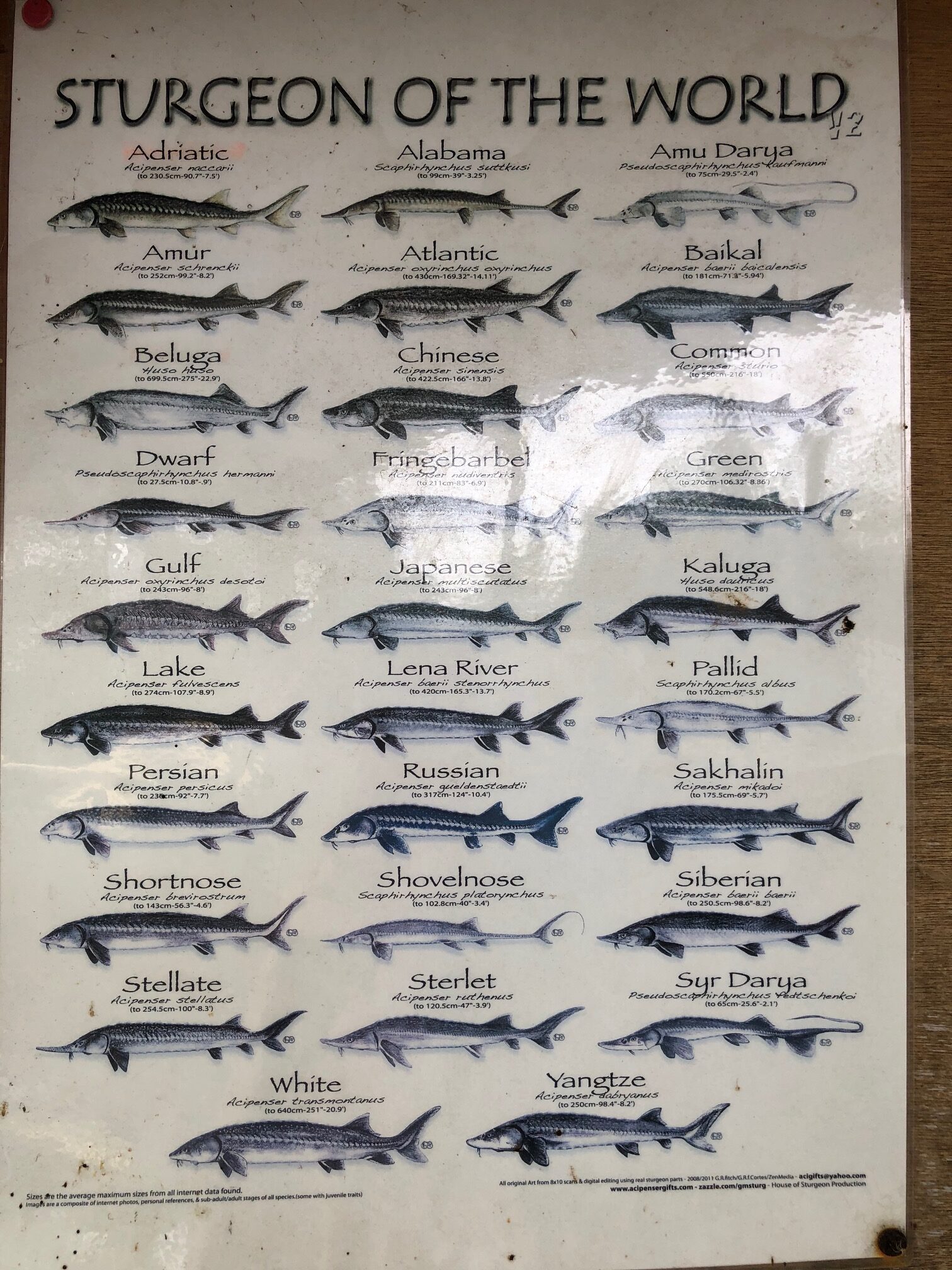
All legal caviar is now farmed as wild caviar has been outlawed to preserve the wild sturgeon. The sturgeon is an ancient species dating back to the time of the dinosaurs, and is related to the shark – so no scales and a cartilaginous skeleton. Some of them look rather like catfish with rounded noses and whiskers for bottom feeding, others – the more well-known varieties – have long pointed snouts. Here they breed Baerii and Ossetra sturgeon for the caviar but keep some other varieties to show visitors, the afore-mentioned males.
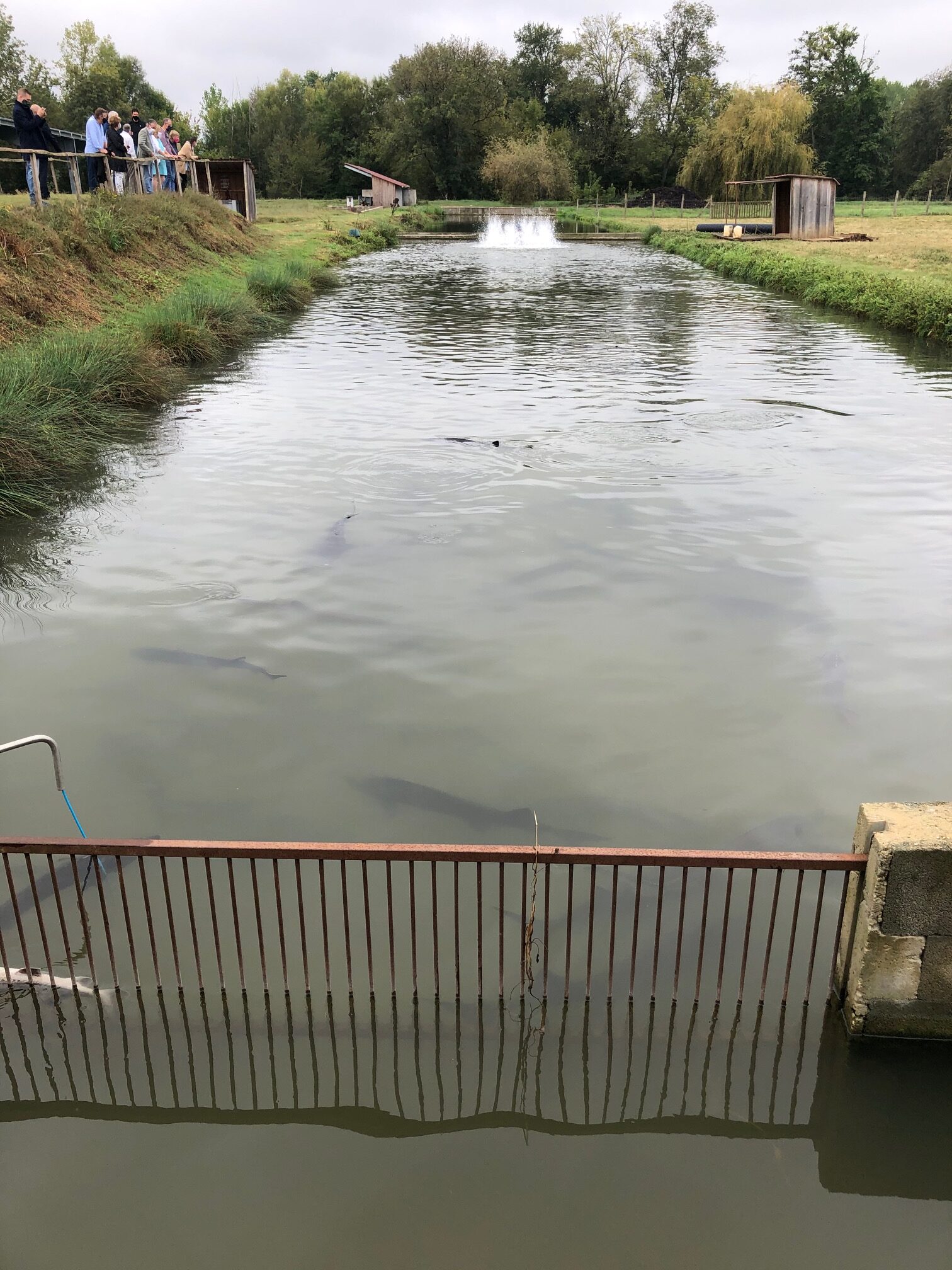
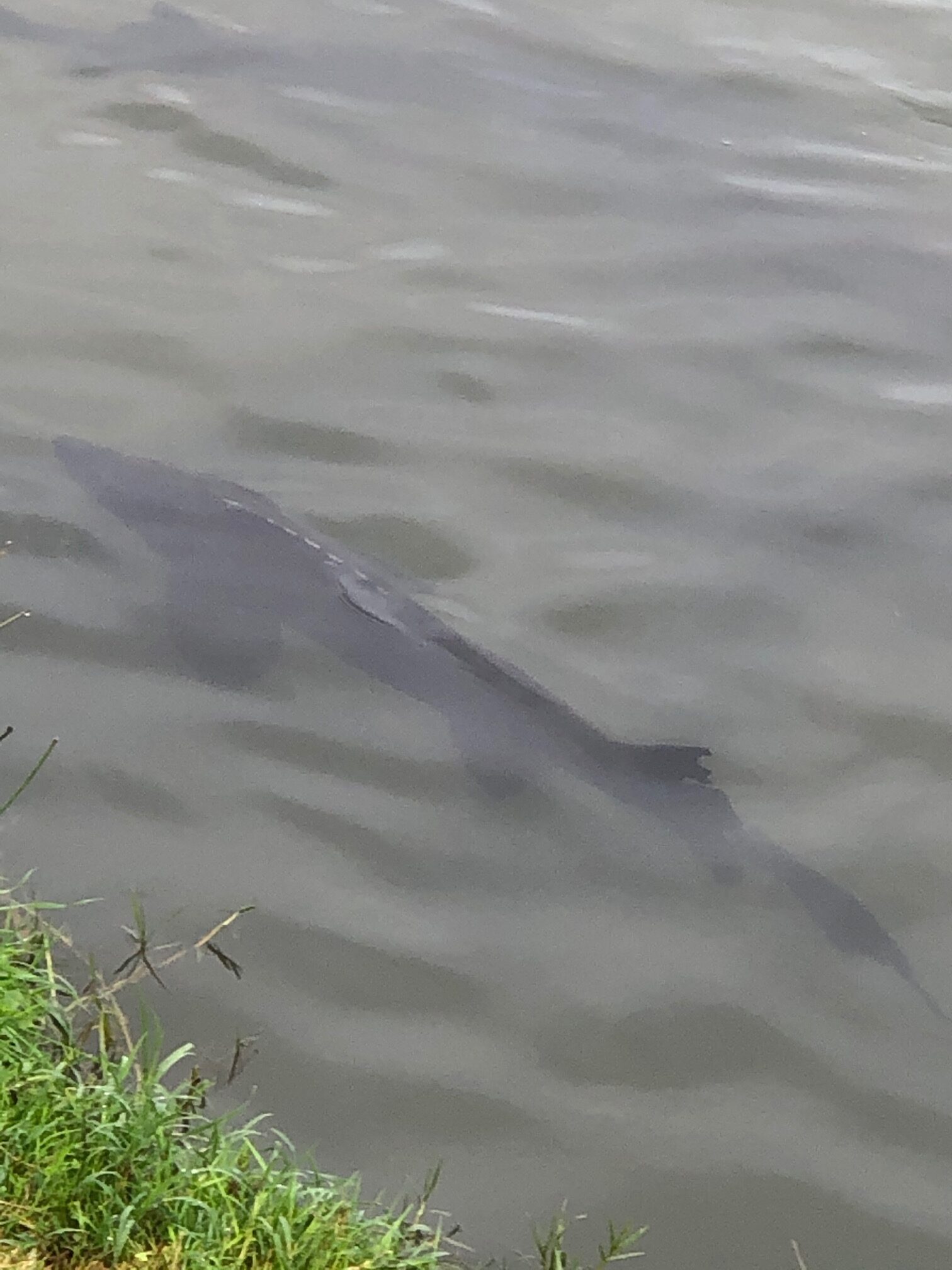
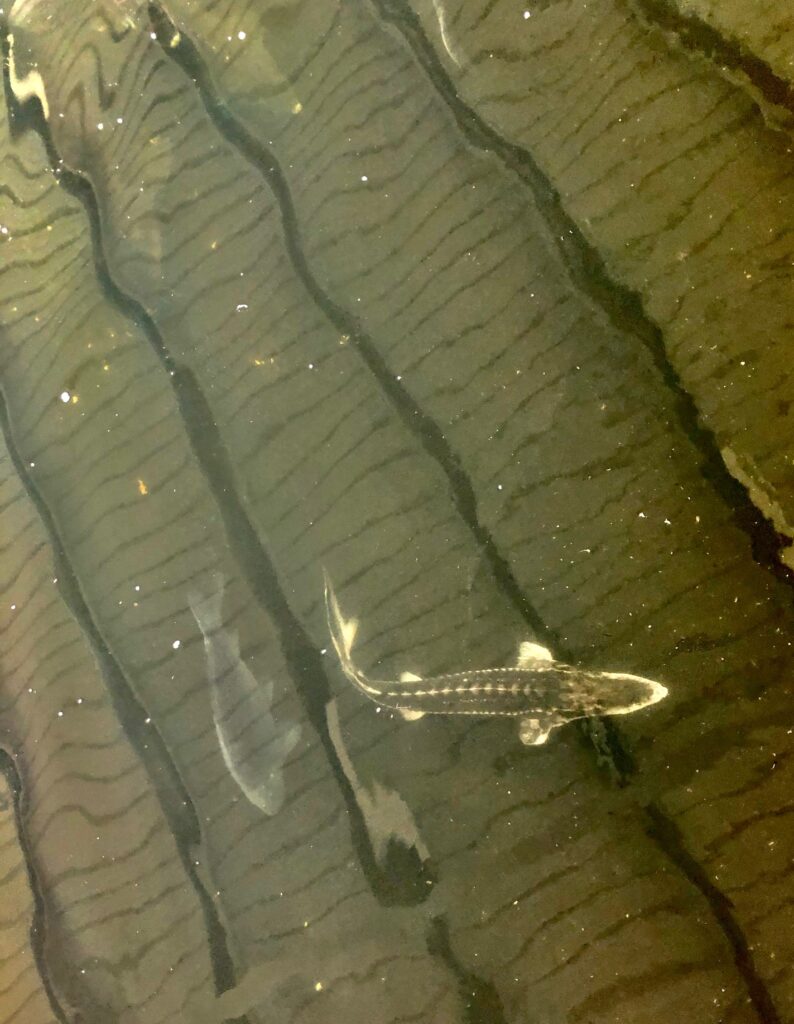
There used to be a lot of wild sturgeon in the region, but the local variety, the Ascipenser Sturio sturgeon, was virtually fished to extinction. The varieties they breed at the farm initially came from Russia. You need very clean water for sturgeon and so the location on the River l’Isle, the river which flows through Perigueux, is very important. The farm takes water directly from the river to flow through filters and into their tanks. After that it flows down a water course they have created with naturally filtering plants which help to clean the water before it is put back into the river, cleaner than when it came out.
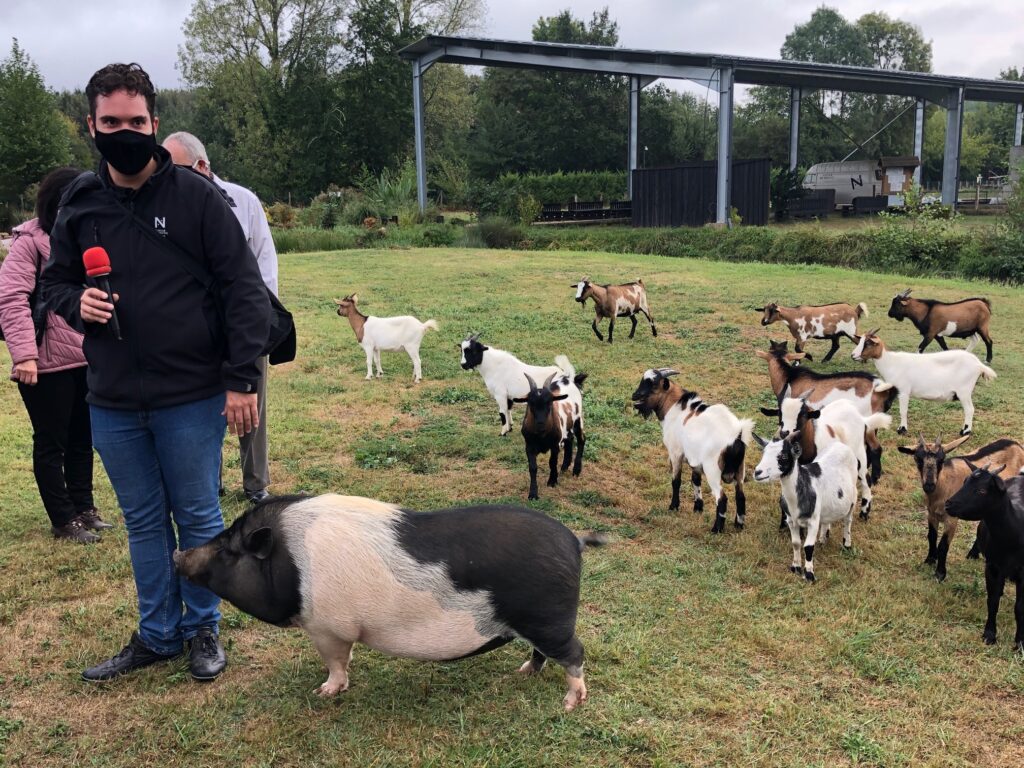
We were taken along the river and then into the grounds of the farm but keeping well away from the tanks with the females. The first livestock you meet are a herd of goats and a very friendly pot-bellied pig – something of a surprise! Then on to an uncovered pool of males – a part of the artificial stream in fact – and later to a small pool of much larger mixed species males.
The pregnant females are regularly checked with ultrasound scans to identify when their eggs are ready for extraction. Those sturgeon deemed ready will leave their pools and go to another set of pools filled with mineral water for around three weeks during which they are not fed, before the caviar is ultimately extracted. Prior to extraction they do a biopsy to remove a few to check that the size (2.5mm) and quality is good. If they have started to reabsorb their eggs they will return to the other pools for next year.
Sadly they do have to kill the sturgeon to extract the eggs, but the meat is sold to restaurants and also processed into rillettes so nothing is wasted. The farm uses only organic foods and all the rooves protecting the fish pools from the sun – sturgeon prefer dark locations, often cave rivers – are covered in photovoltaic panels. Its quite a set up.
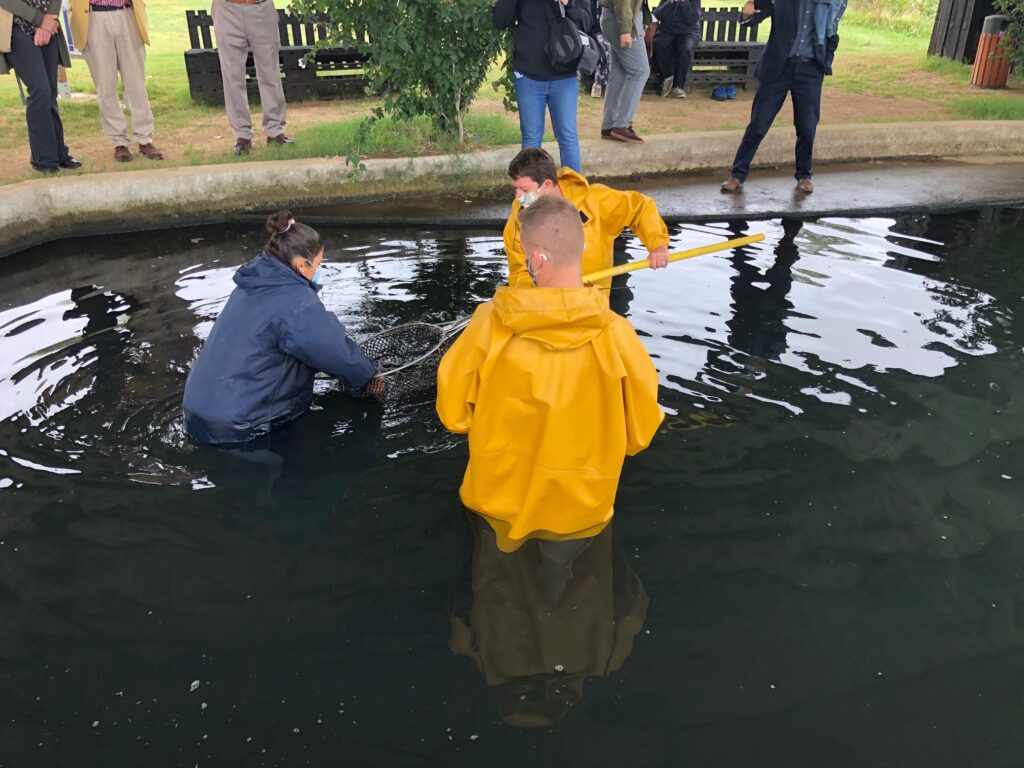
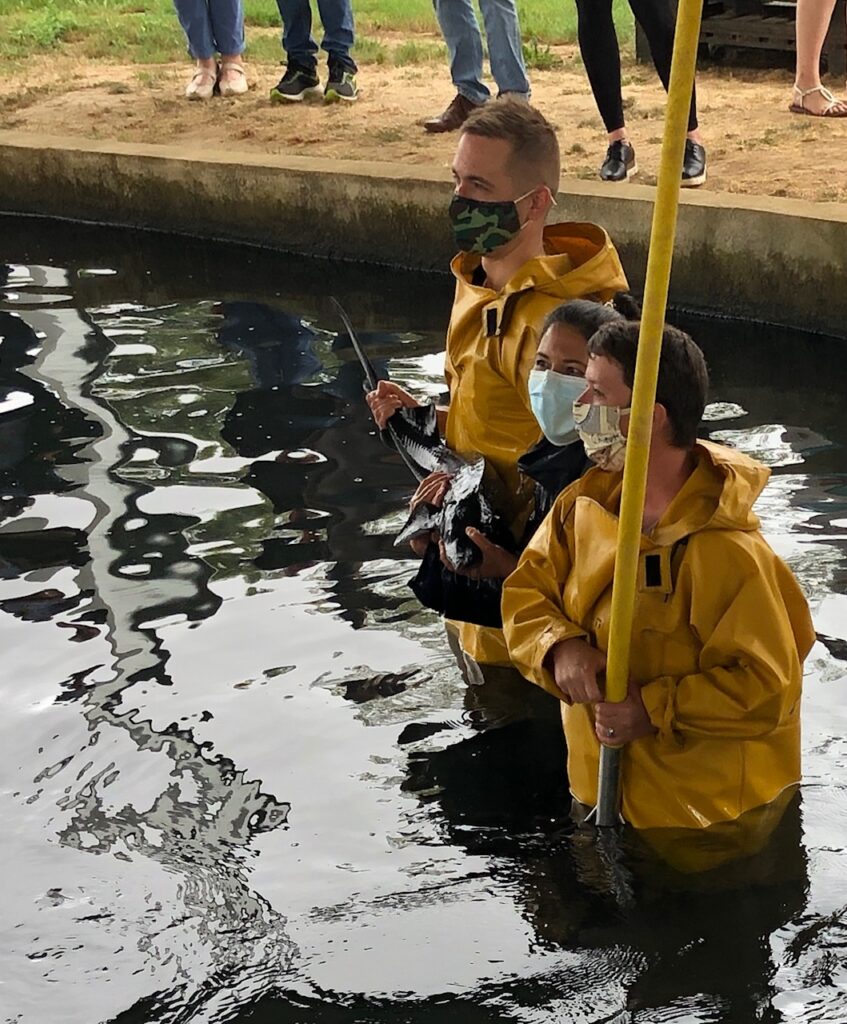
At the pool of larger males – some up to 35kg – we were asked if anyone wanted to get in and try to catch one. I have to say we both wimped this as it wasn’t clear that you wouldn’t get soaked in the process. Three brave souls did and were kitted up with oilskins, so that answered that question. The process was for one of them to net a fish, headfirst as they can’t swim backwards. Then the other two had to try to grab the tail, pulling it out of the net when one must grab the nose to calm it down. That’s when you realize why they suggest you go for a long nosed one!
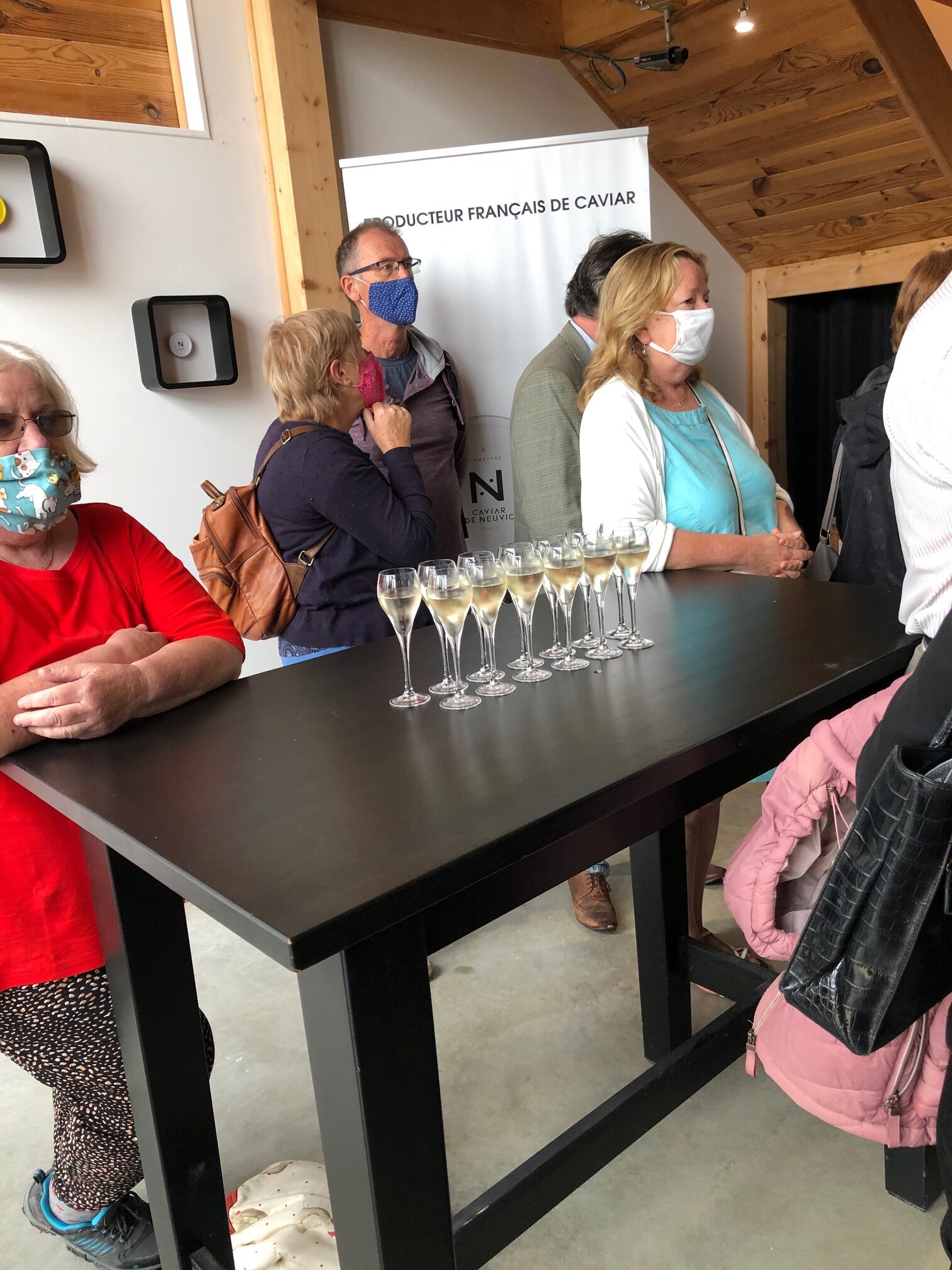
After that we went back to the shop where we were given a glass of very nice local sparkling wine and a tasting of 3 different products. The first was the rillettes – much like an upmarket fish paste, tasty but not enough to tempt us to buy. Then it was caviar butter – allegedly this has 35% caviar mixed into salted Normandy butter. It was black, but other than that the caviar was not in evidence – no flavour of it came through the butter we all agreed.
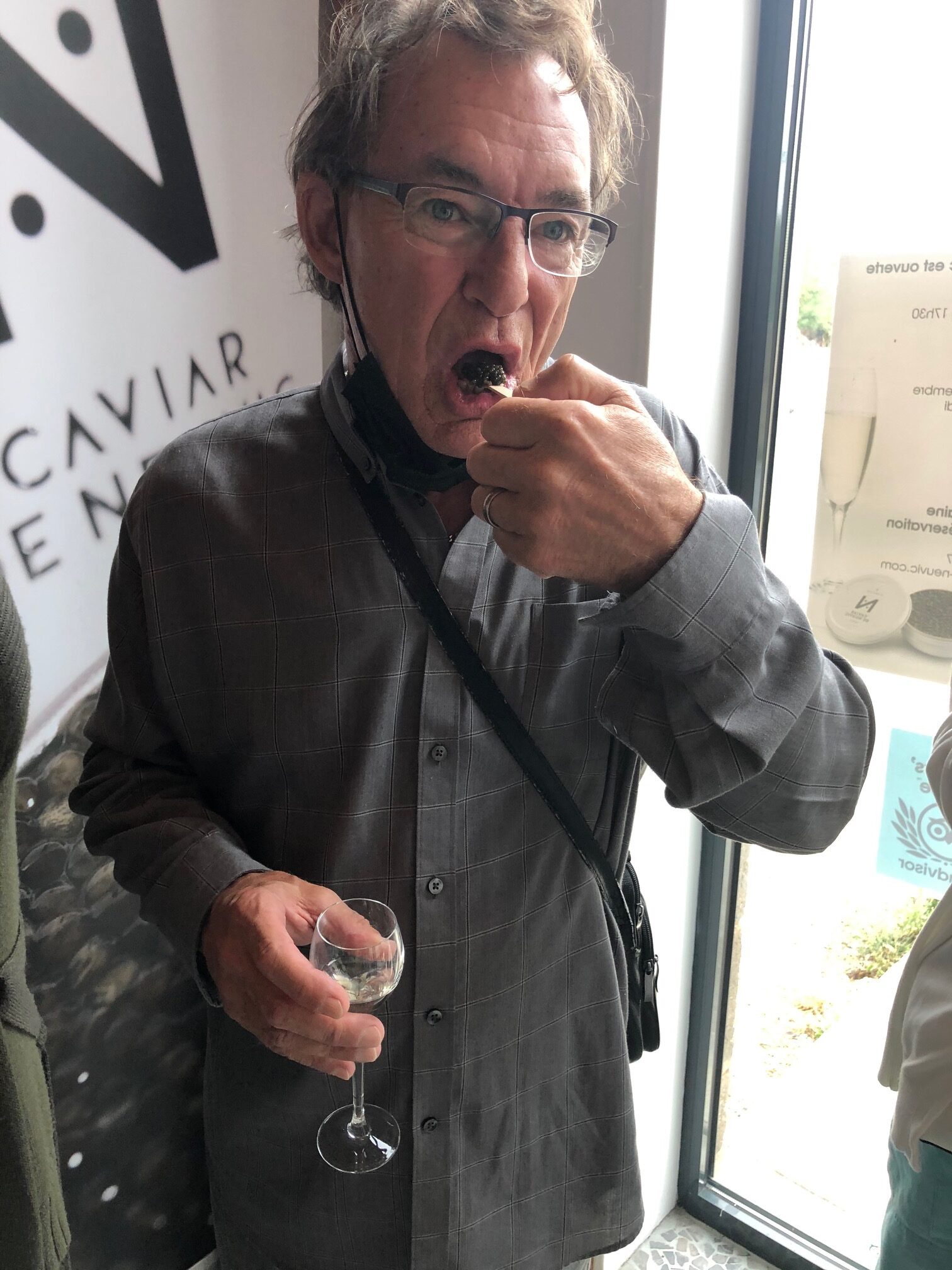
Then we tasted the caviar itself. We were told to never put it on a metal spoon as that affects the flavour, and we were given ours on small wooden teaspoons which were to be recycled afterwards. The advice is to taste it in 3 goes, first to get the palate used to the saltiness (they add 30% salt to theirs), and the following two times to roll it around the mouth and get the fish flavour from it.
What can I say – a fascinating tour, but, unsurprisingly, we were somewhat underwhelmed by the product. Chacun a son gout, as they say here!
Afterwards our group of 29 headed off to a local restaurant for a very convivial lunch in which sturgeon and caviar were conspicuous by their absence. The food was good, the wine flowed and nobody seemed to mind at all 😉