With apologies – I could swear I had already uploaded this post, but it appears to have disappeared into the ether……
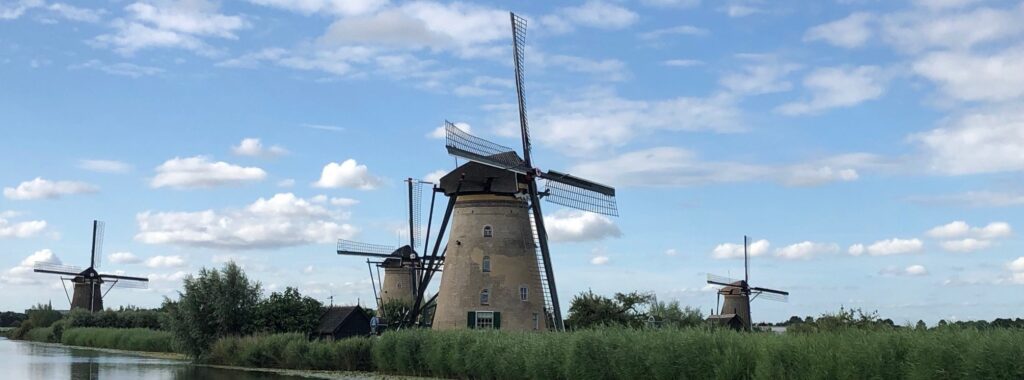
We woke up on 14th July to our first full day of the Viking cruise experience, having travelled through the night to Kinderdijk, which is in the south of The Netherlands, which surprised me as in my head I assumed we would be heading east to meet the Rhine. In fact, we were in the Rhine delta region, where the Rivers Lek and Noord meet and Kinderdijk is a small hamlet which has become a living museum preserving their 18th century windmills for posterity.
We were moored in a canal, which, as they all are in The Netherlands, was higher than the surrounding countryside. Therefore, we disembarked and walked down the embankment, or dyke, to meet our guides for our first tour location, the Windmills of Kinderdijk.
Now I think every child has heard the legend of the little boy who saved his village by sticking his finger in the hole of a dyke but that is literally a fairy tale. There is another based here which resulted in the village name of “Children’s Dyke”, which I will come to later. Of course, the tour guide couldn’t resist a joke about the former story!
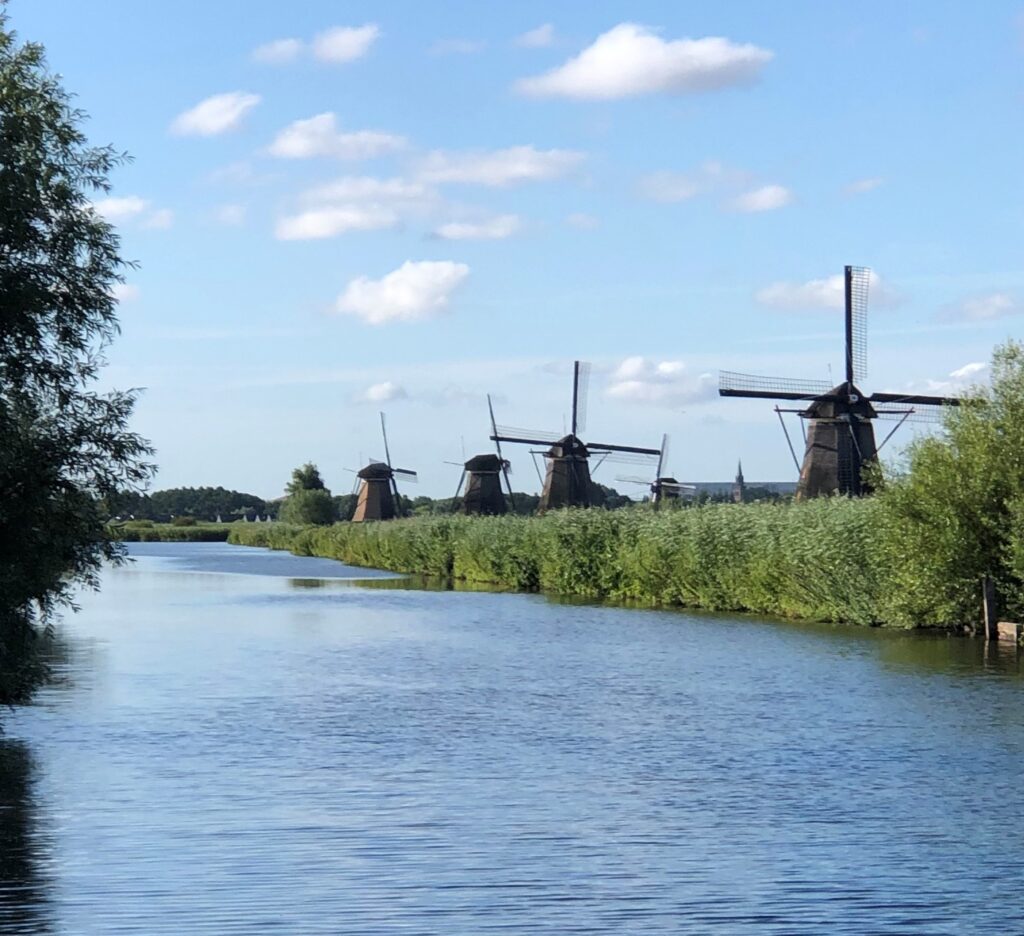
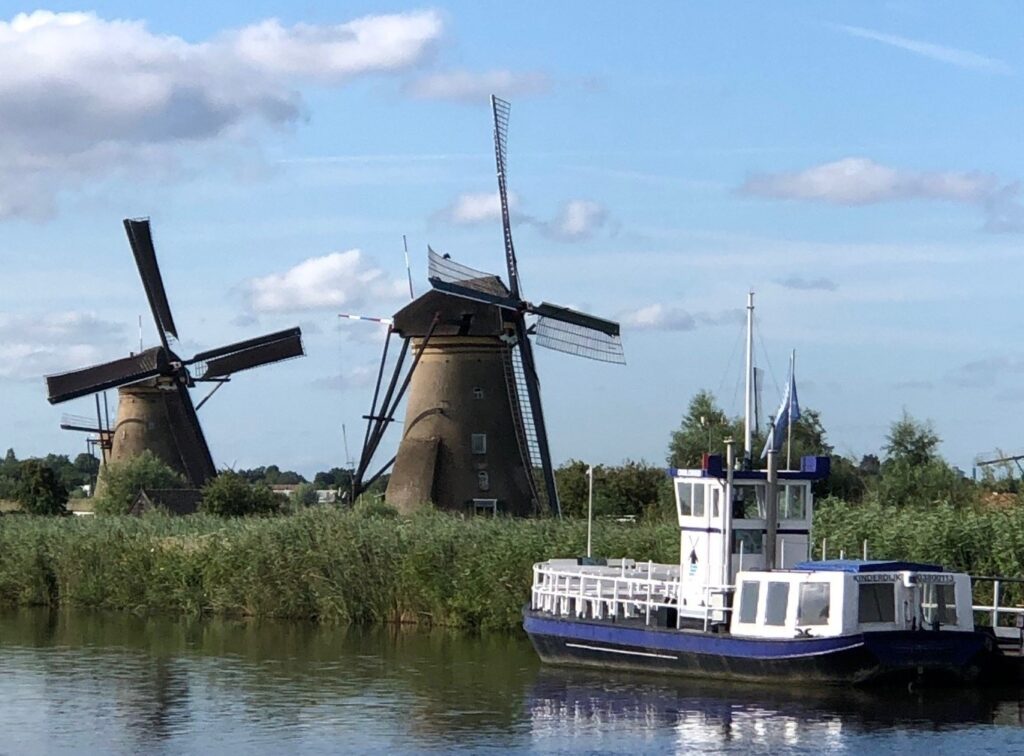
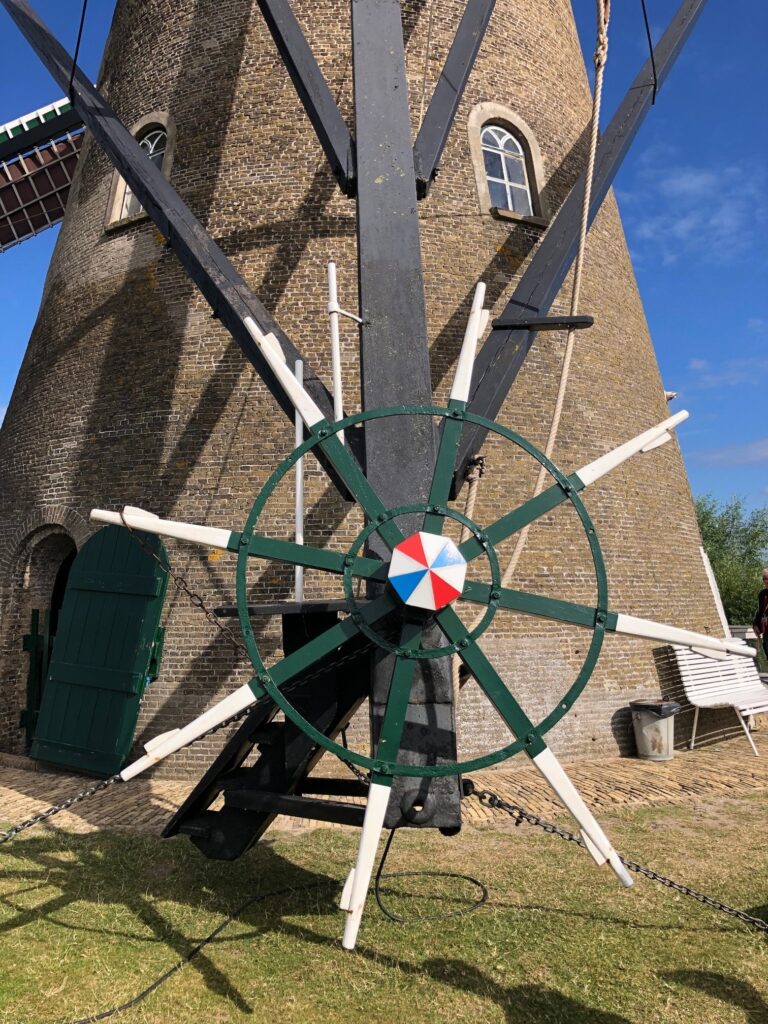
Our guide was very informative and immediately put us straight on the function of these windmills – in this area they are all simply water pumps. It is said in The Netherlands that the country owes its existence to the windmills. Without them water could not have been drained away from the marshlands allowing the population to live and farm on the fertile land below. Most of the remaining windmills no longer function and are preserved as an important part of the country’s heritage. The guide told us her most important tours are those given to Dutch children so that they can truly understand how they can live in this land.
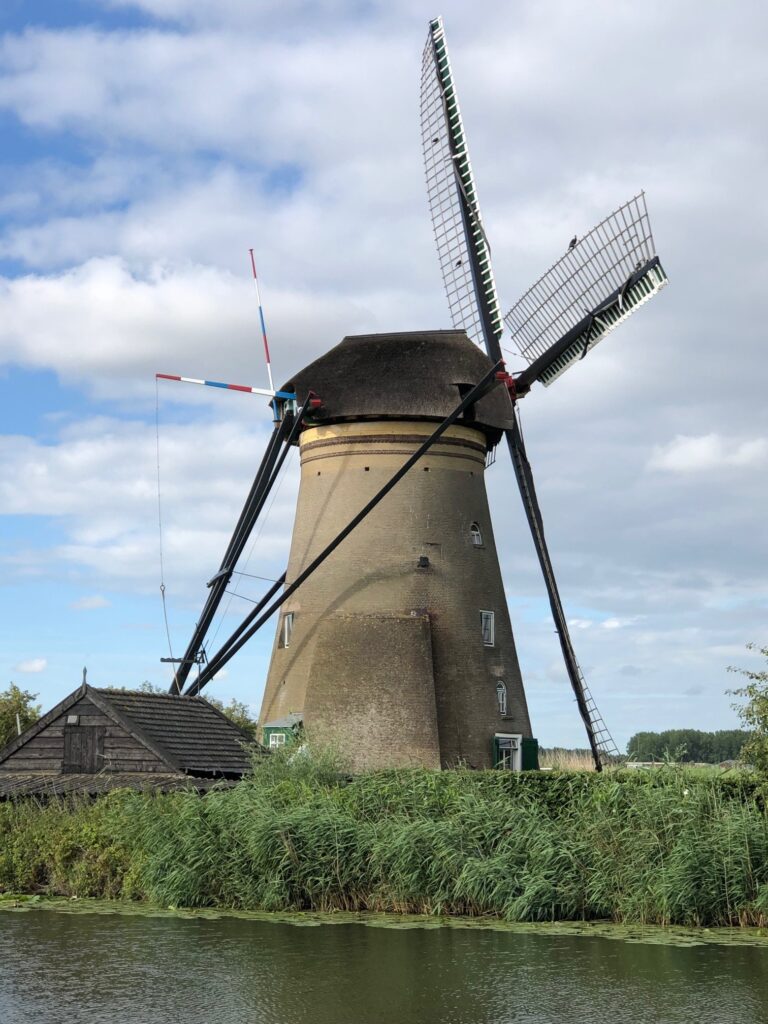
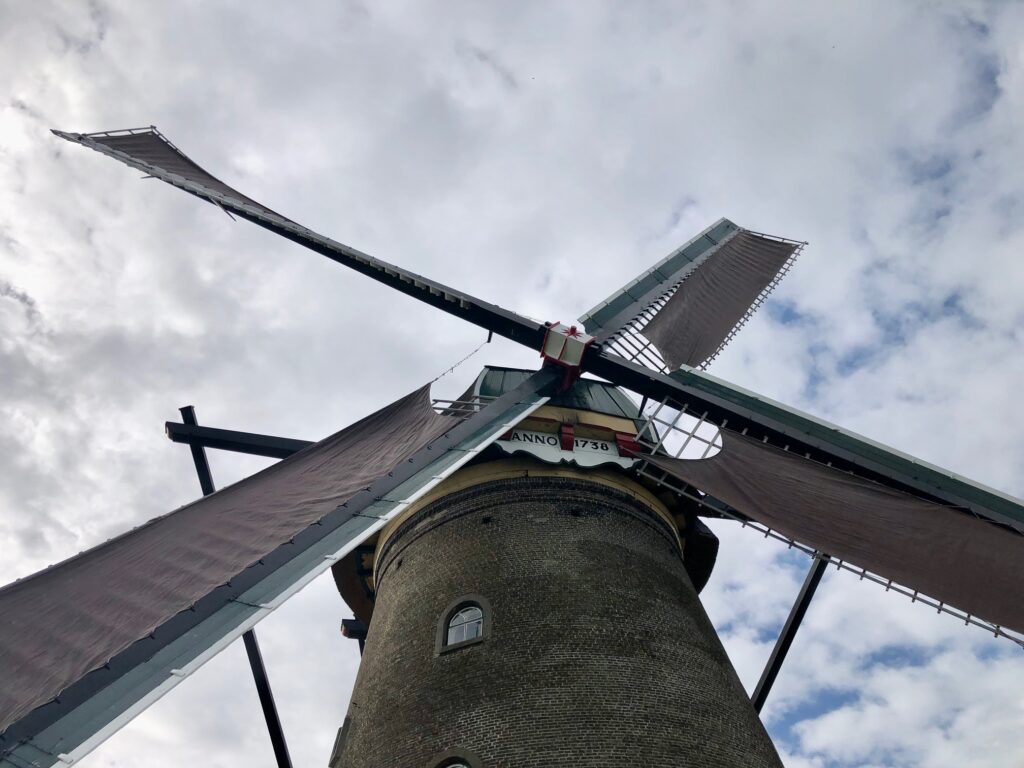
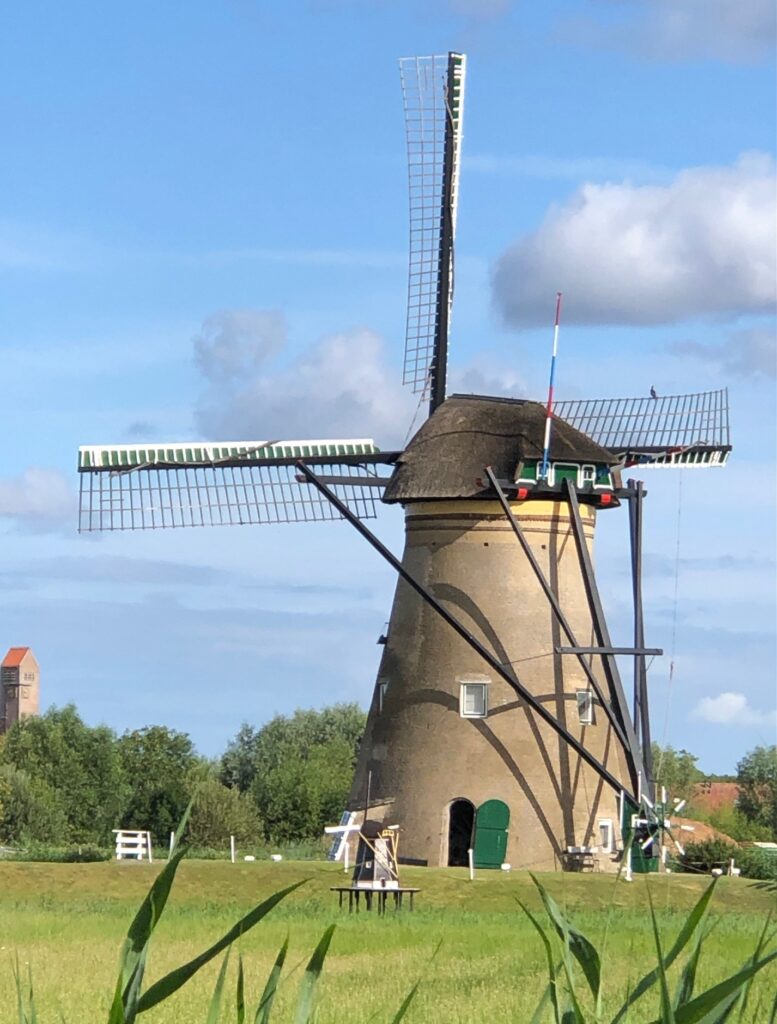
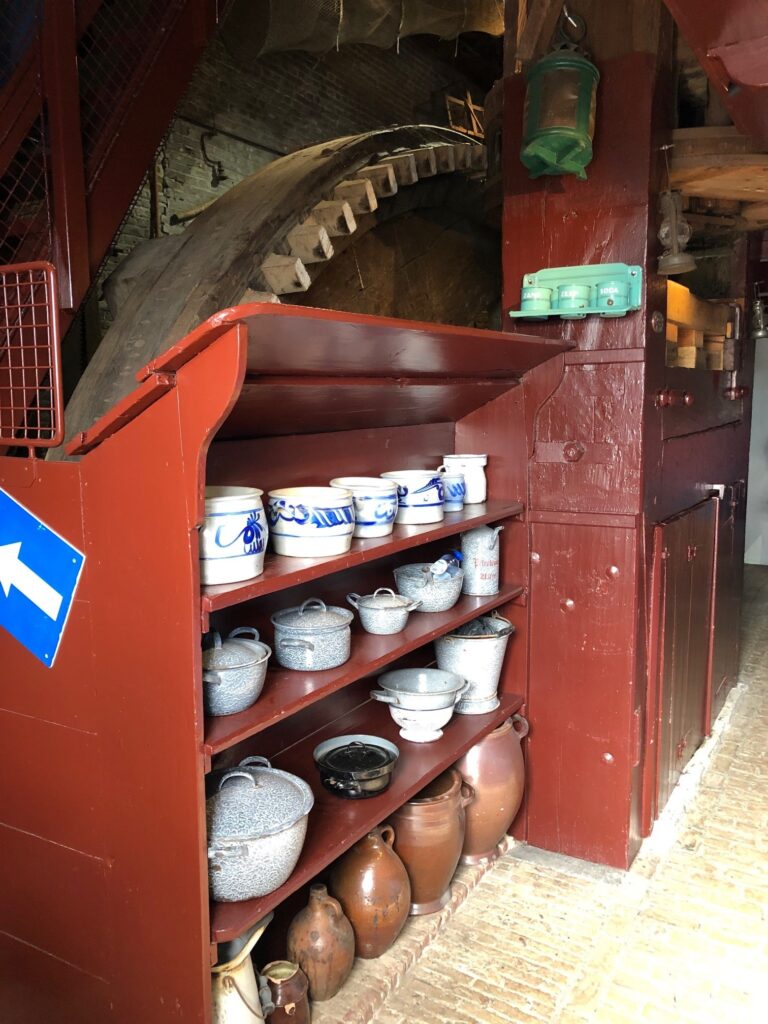
In the foreground of the 3rd photo you can see a mini-windmill – this is not a toy, but a working replica which was used by the miller to teach his children how to operate the full size one when they were old enough to take over.
Kinderdijk has managed to preserve the most windmills in one area, with both the wooden and brick construction versions represented. One of the brick ones is inhabited by a family who have to keep that mill in working order to demonstrate to visitors, and we had a tour of the interior which is kept as it would have been – so for very small people! The windmills’ was function passed on to Victorian pumping stations, and later more modern versions, so that they also have a Victorian one which is now a mini museum.


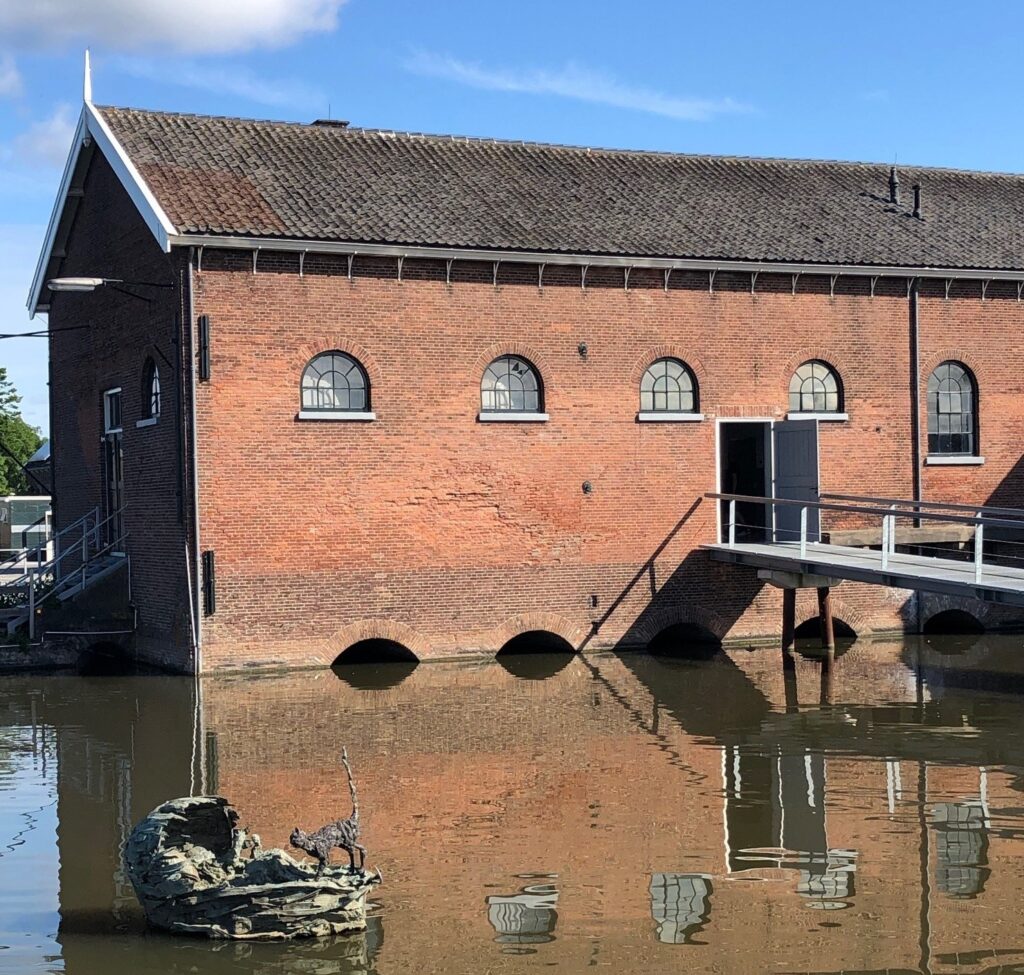
And now back to the legend I mentioned earlier. You can see in the foreground of the photo that there is a battered cradle and a cat. This – and the name of Kinderdijk – refers to an event known as St. Elizabeth’s Flood of 1421. There was a huge storm which caused extensive damage. In the aftermath a local boy went to inspect the damage to one of the dykes and was astonished to see a wooden cradle rocking on the water containing a sleeping baby girl. Even more incredible was that there was a cat on it, jumping back and forth to keep it from tipping over.
A different version of this story takes place in pre-Christian times when scarcity of food meant the matriarch of the family might forbade her daughter-in-law from feeding her new-born to conserve their resources. A kindly midwife allowed a drop of honey to fall on the lips of the starving baby, allowing it to be saved under tribal law as it had then tasted food, so it was saved. The child was called Honigje and then hidden and watched over by a cat called Dubbeltje. This was a cat the jumped on the cradle when the floodwaters rose and rocked it in the waves to save Honigje. The cat lived all its nine lives with her and they died together many years later and were buried together.
Apparently every year on St. Nicholas Day (6th December) Dutch children give their pet cats new collars in honour of Dubbeltje ! Awwww…..

Our stop at Kinderdijk was brief as we set off to join the Rhine and travel upriver towards Cologne, our stop for the following day. We passed many “beaches” along the river, and so also many campsite. Surprisingly many of the beaches had cows on them, who appeared to also be on holiday as they lounged on the sand – sadly a bit too far from us to make a good photo, but I tried of course.