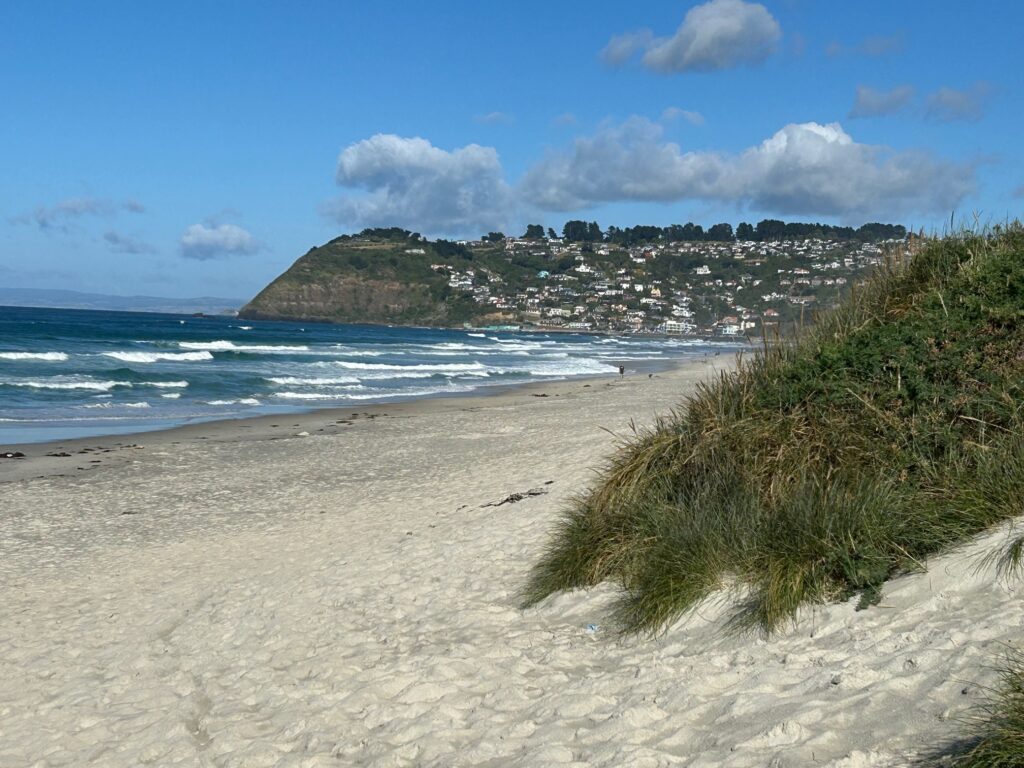
We arrived in Dunedin campsite which was located just behind a lovely empty beach. We were then treated to a night of wild weather and rocking vans!
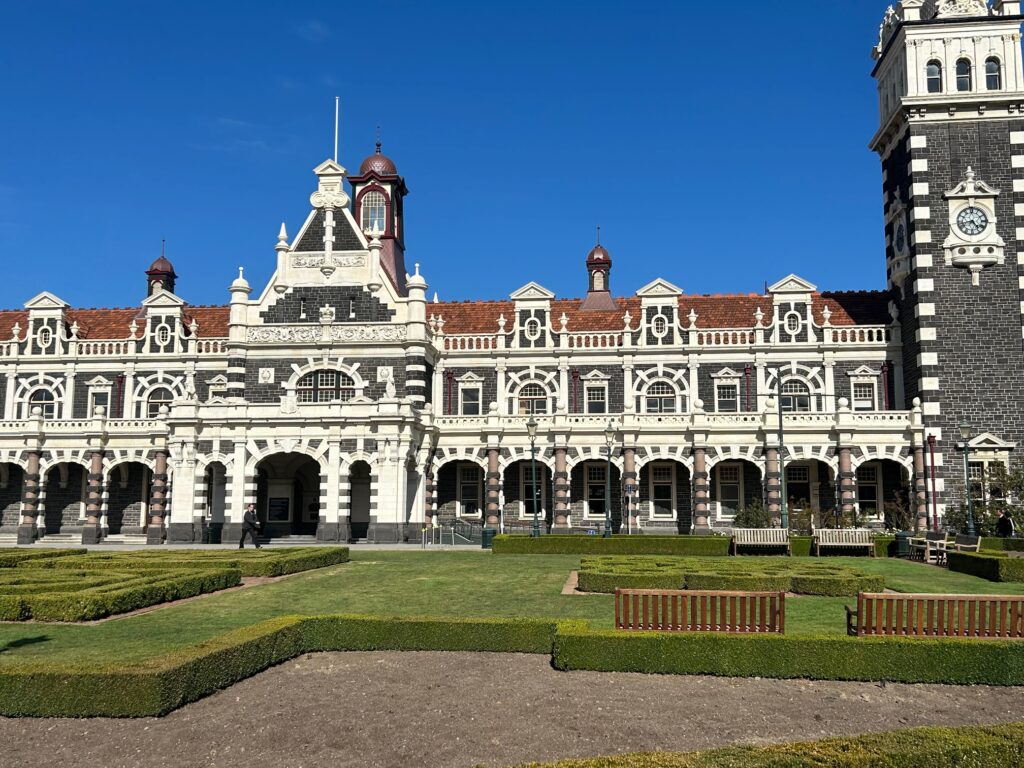
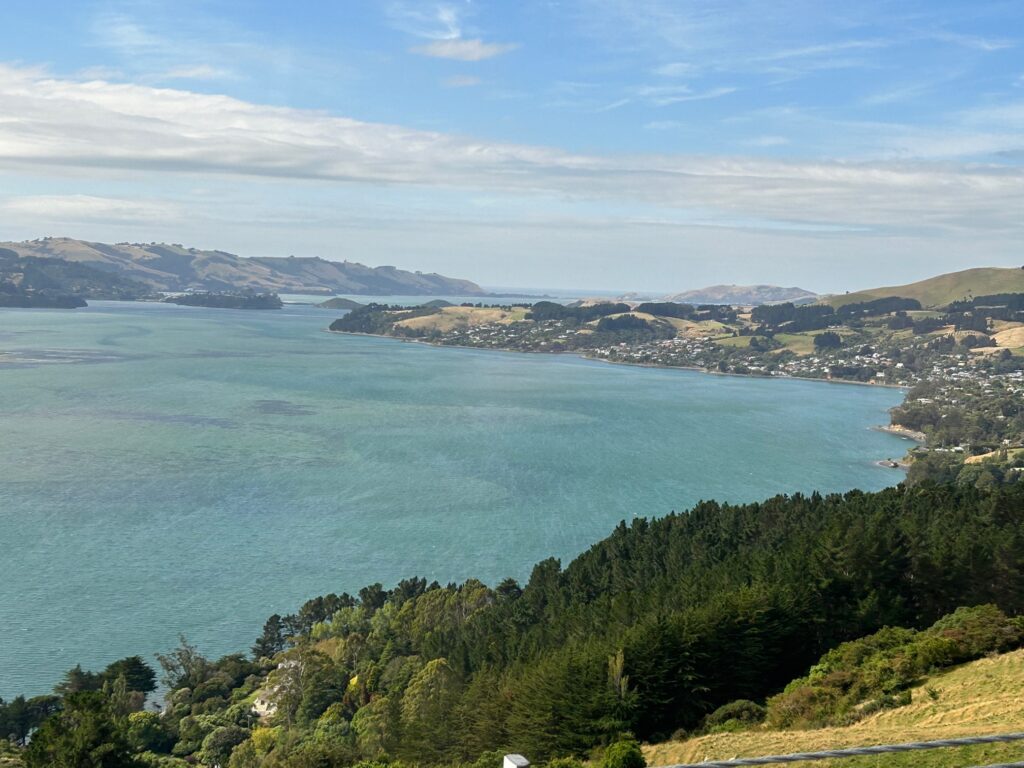
As I found out on the tour the following day, the town was eventually established after 60 years of visiting whaling and seal fishing boats. Later on it boomed when gold was discovered 40 miles away and became the centre of the subsequent gold rush. It covers quite a large area, including what must be the high end residential area spreading along the Otago peninsula across the bay. The bay itself is an old volcano crater and the small islands at the entrance are remnants of the rim.
The next day I went on a wildlife boat trip with a number of other fellow campers. This was the trip we booked a couple of days ago at the group meeting – 2 other couples booked with us to have the version with the pick up and drop off included, and 3 others opted to drive to the departure point themselves.
It was lucky I booked us with the transport as in the end B couldn’t make it due to having a stinking cold. I met with the other 2 couples and we boarded the minibus to get to the boat. Happily this was only a 10 minute drive and it turned out we had a harbour tour before the rest of the group joined us on the boat an hour later at a different pick up point. The captain was very knowledgeable and told us a lot about the history of Dunedin – a Scottish colony (long after the Maoris of course) and the name is Celtic for Edinburgh. There is one nearby area named St Leonards (after the one in Sussex) by an English couple, and that name only remained as its also a district of Edinburgh!
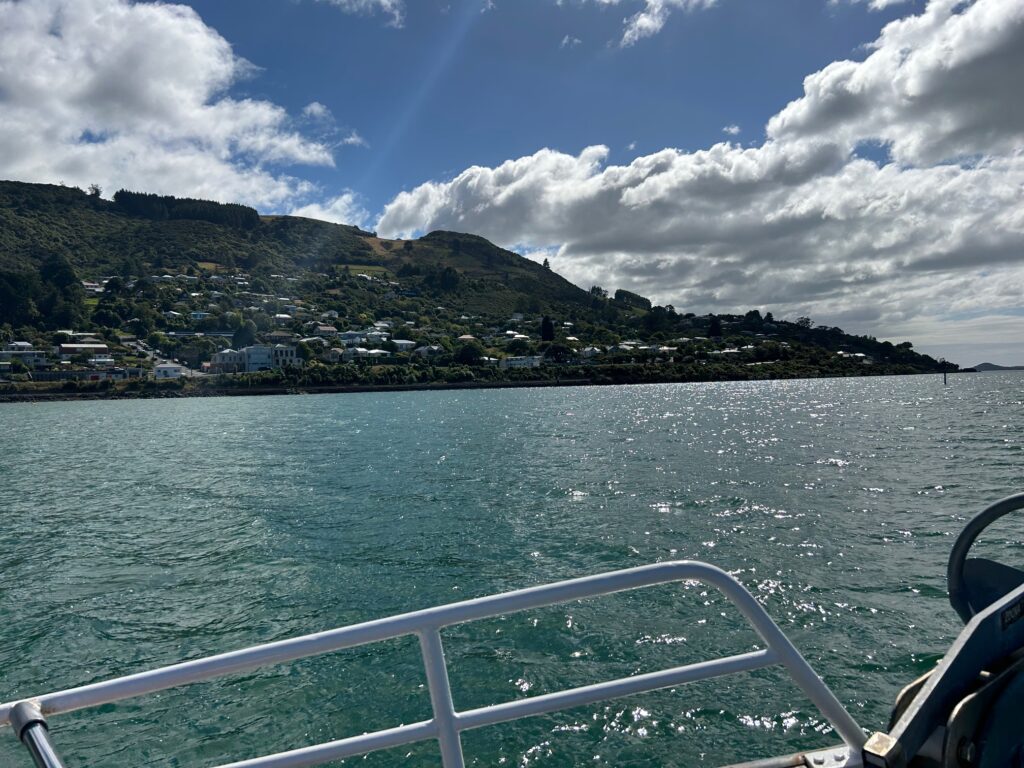
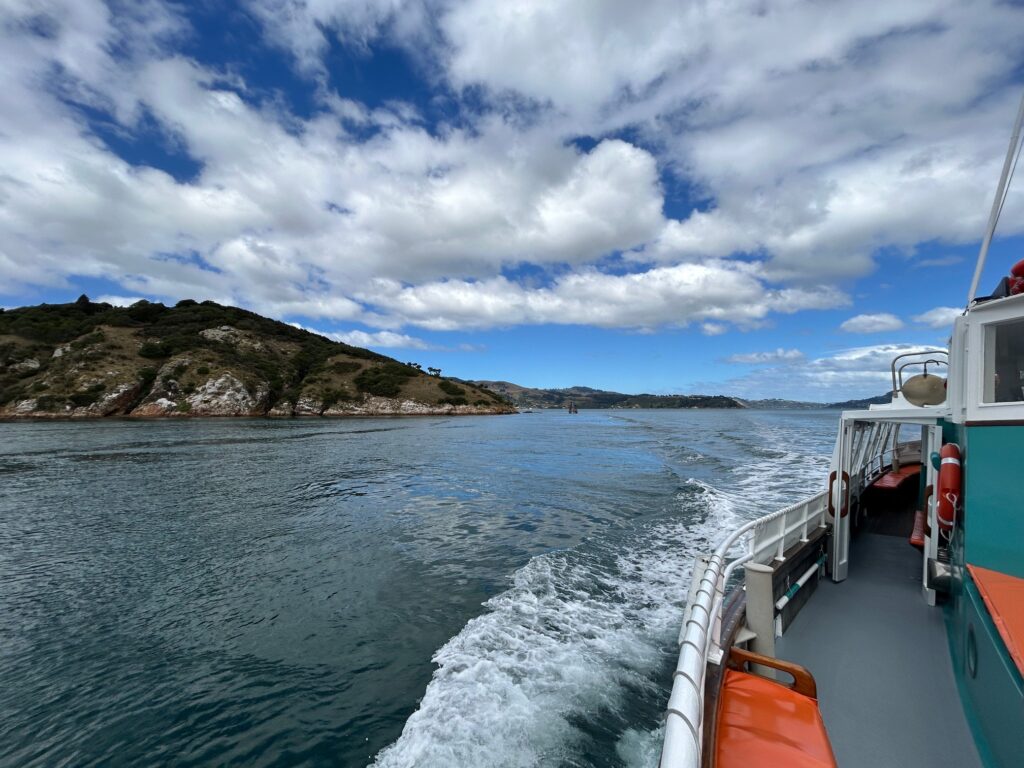
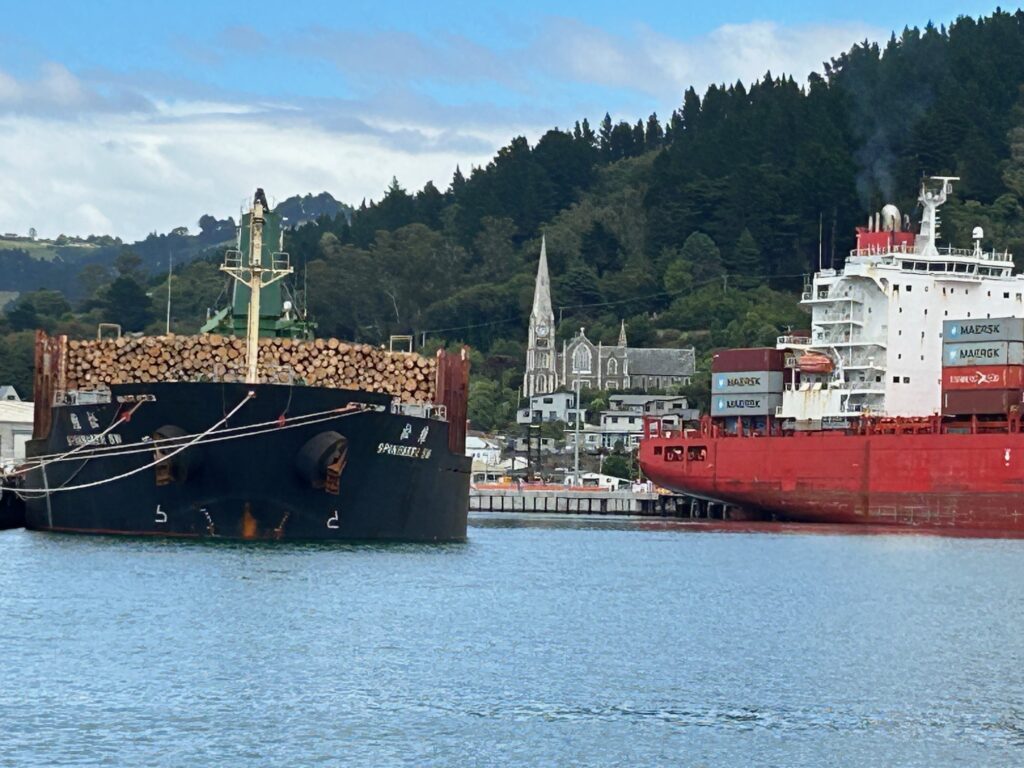
After we picked up the rest of the passengers close to the mouth of the bay we set off in search of the promised wildlife. First off were the local shags (all cormorants here are called shags) and then to the headland of the Otago peninsula where there is a breeding colony of albatross – the largest flying birds with a wingspan up to 3.2m. We saw them, but from quite a distance so you needed binoculars (provided) or a telephoto lens on your camera (not) to see them properly. There was one with a chick and a pair on another nest – apparently you don’t often see the pairs together as they take turns at incubation and then searching for food.
Interesting facts: they pair for a year, laying just one egg which must be incubated for 79 days before it hatches. Both take their turn sitting. Then its another 8 months to rear the chick to the stage that it can leave. Then then pair split up and leave for 12 months, flying over the oceans, and come back, often exactly to the day, a year later to hook up with the same mate and repeat! The fully reared chicks fly off for anything from 4-9 years circumnavigating Antarctica before returning to look for their own mates. In that time they never put down on land, but they do land on the sea and drink seawater. They have a special salt gland behind their eyes to remove excess salt from their blood and expel it as brine through their sinuses and they can smell for a distance of 20km!
They also prefer wild and windy weather – probably why they are seen as bad luck by sailors – as when its calm they find it hard to take off from the water due to their size and wingspan. We saw 2 or 3 flying, one of a smaller species with a span of just 2.7m and the other from the species of 3.2m.
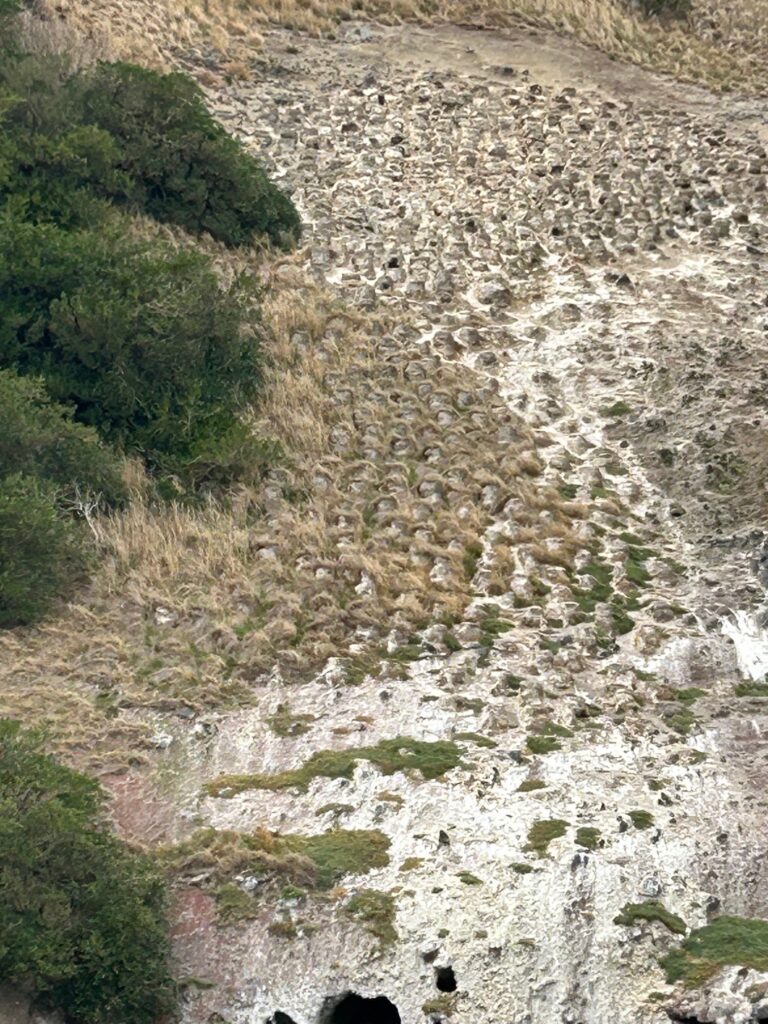
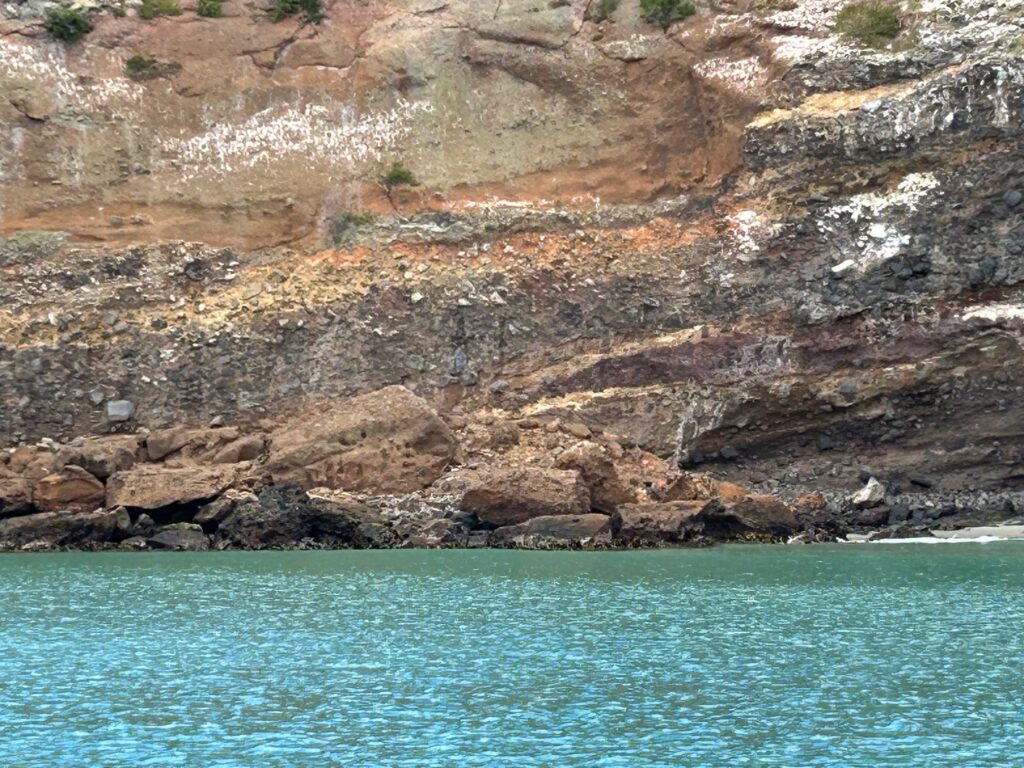
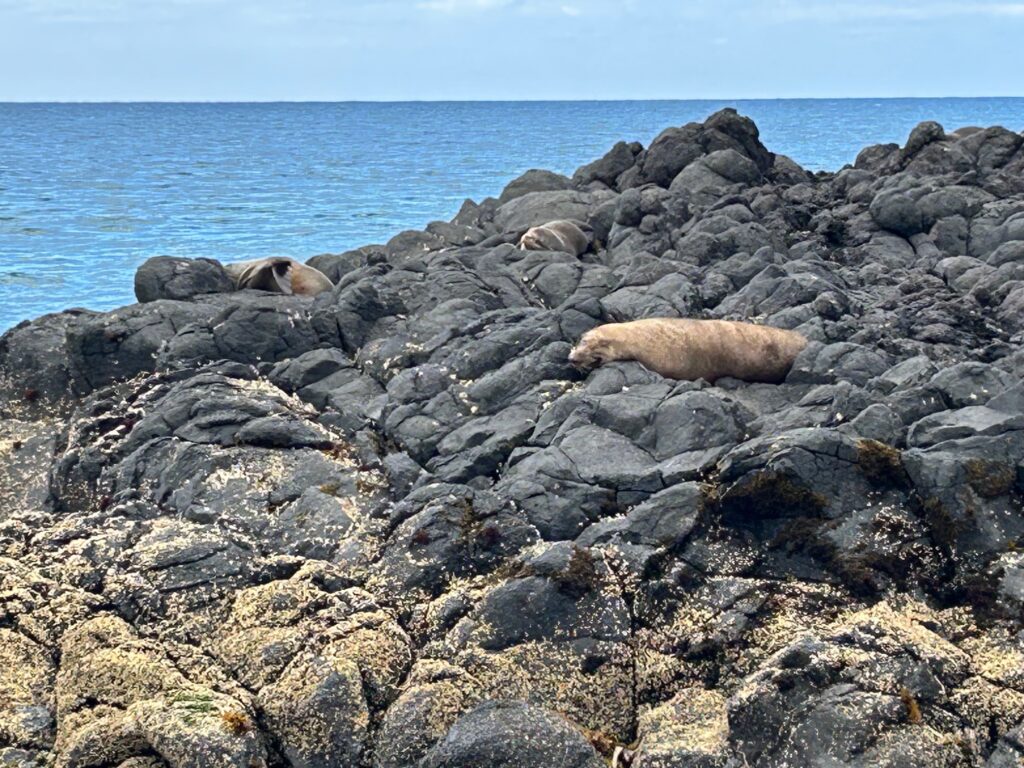
The trip was scenic, as we were all coming to expect, and there was a good download of information. However, we were really too far away to be able to see much of the promised wildlife. The best were the fur seals, but picture quality not great as I had to zoom in as much as the phone would allow to be able to see them. Likewise the albatross were just white dots on a hillside, though we could make out the mounds which are their nests. And this was the start of the elusive New Zealand blue penguin hunt – I think I saw a black dot on the water in the distance…??!!
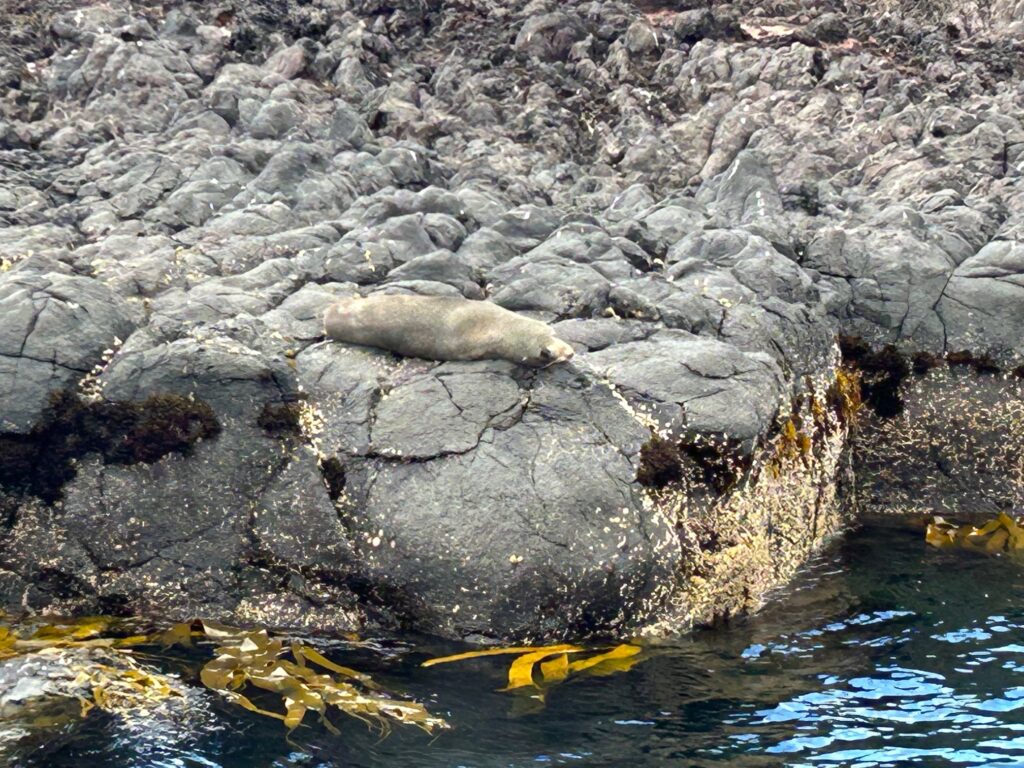
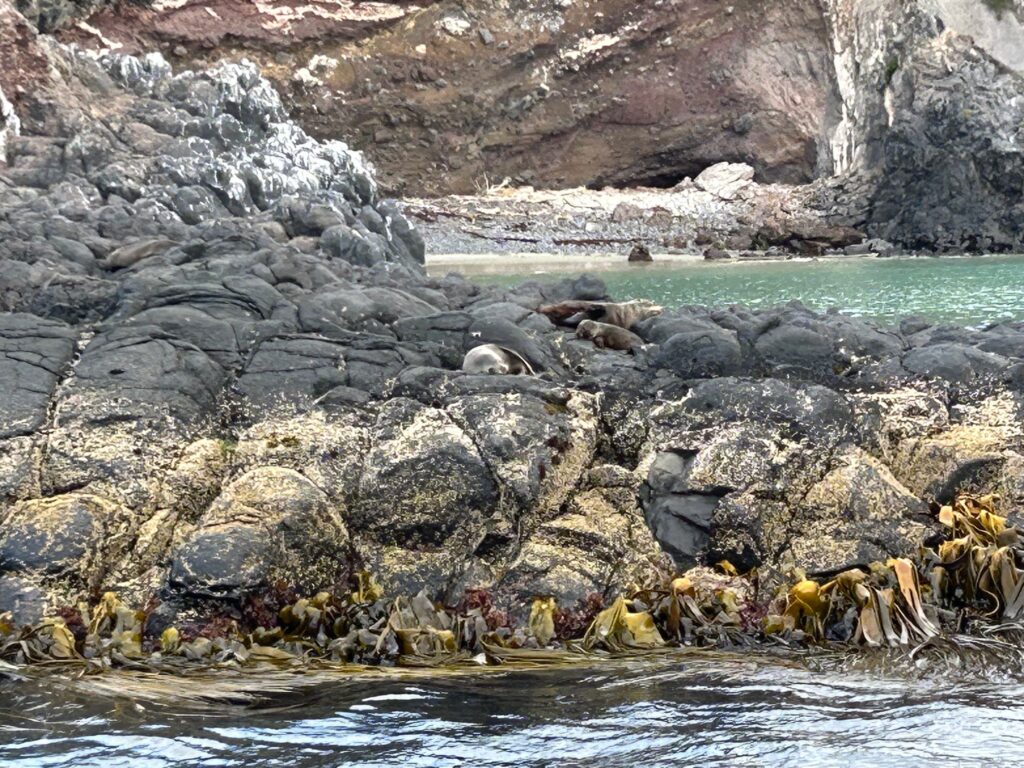
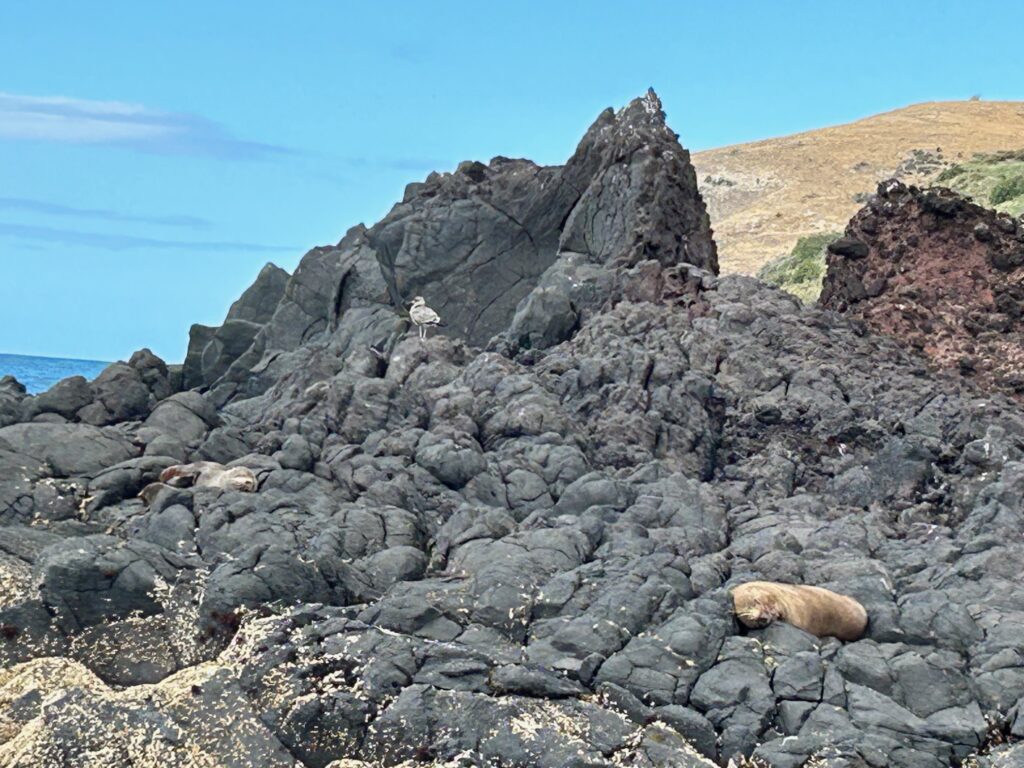
Fur seal facts: when they are on the rocks they are sunbathing and digesting dinner! The females are pregnant and suckling for 90% of their adult lives. The sealion is larger. It takes them a month to travel from here to Chile. After circling the fur seal headland we turned back and headed for the drop off point on the Otago peninsula.
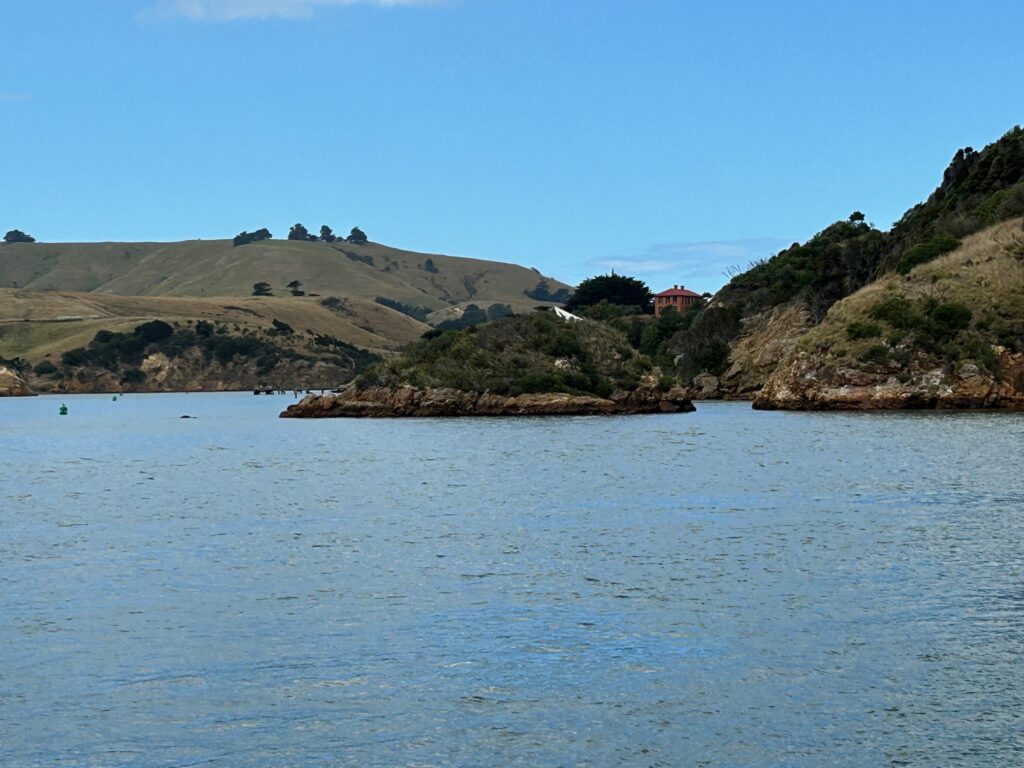
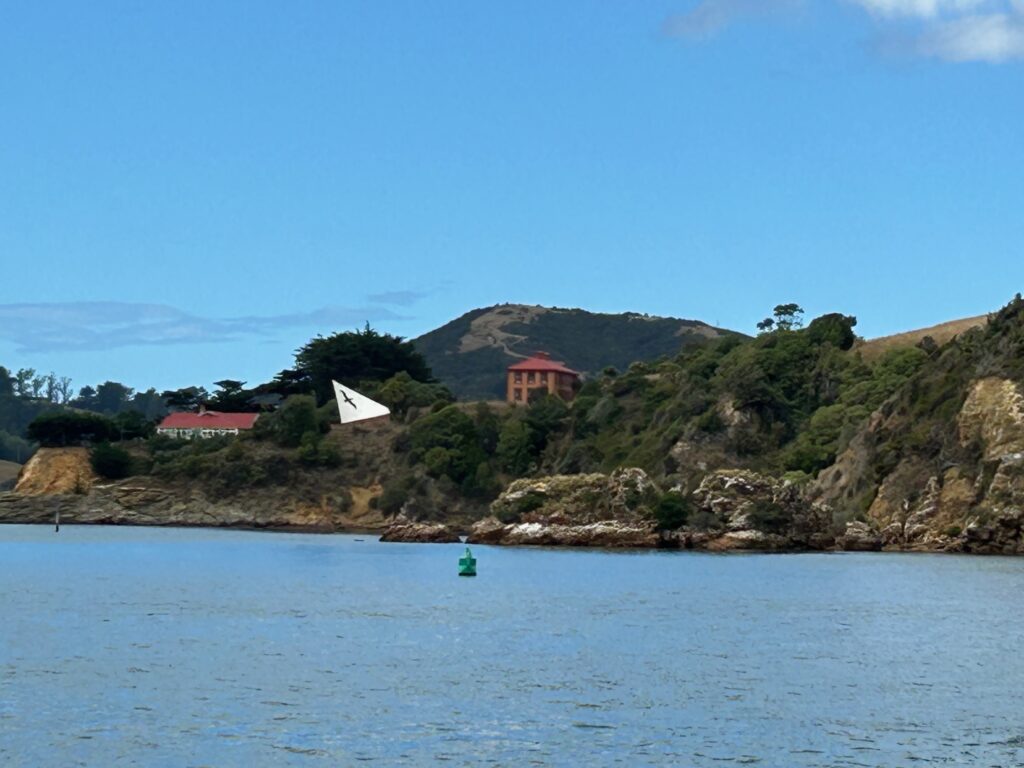
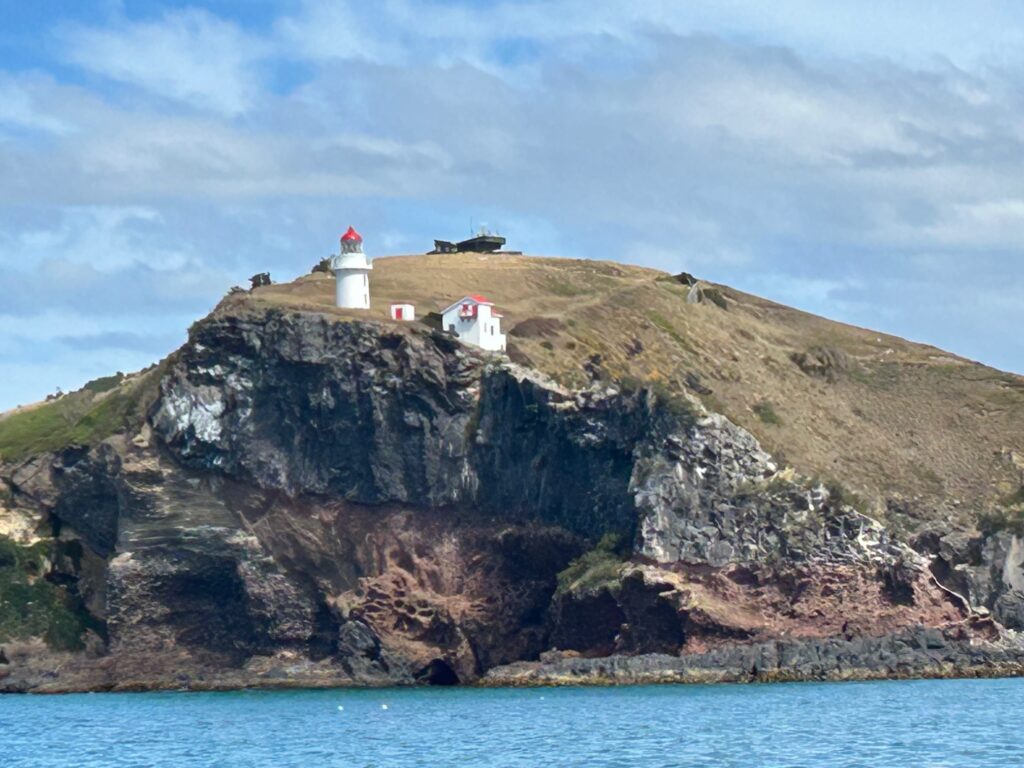
I think that the island in the first 2 pictures above had a house used for incoming settlers – to isolate them, much as we saw in Australia. The third photo is, obviously, a lighthouse !
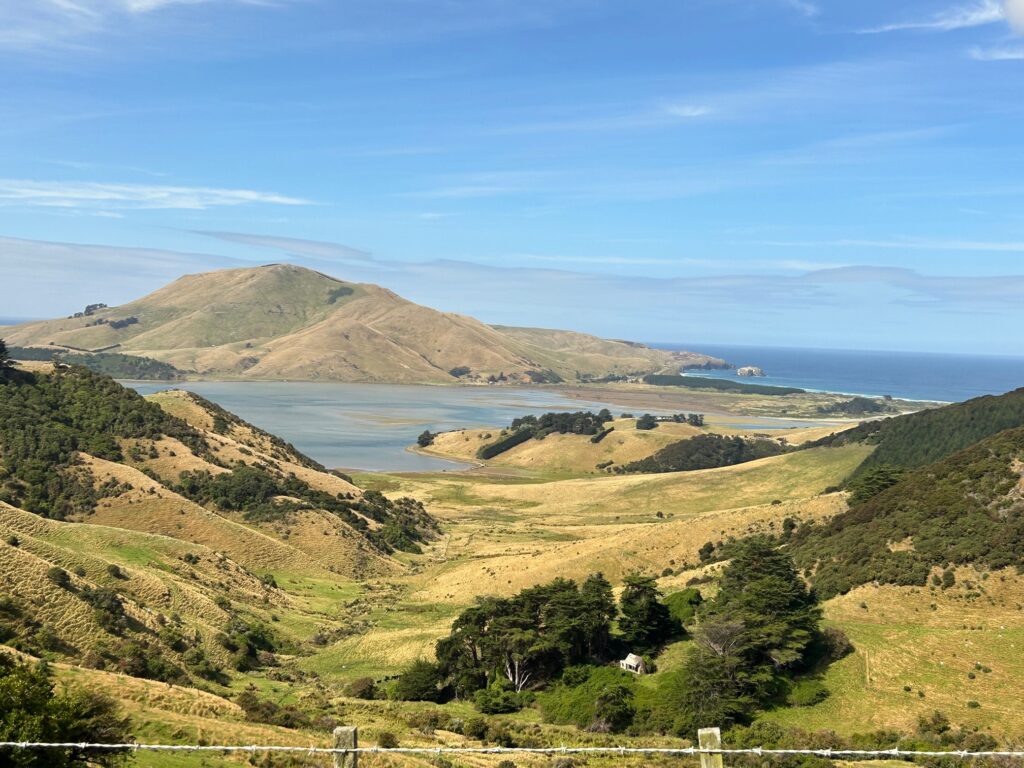
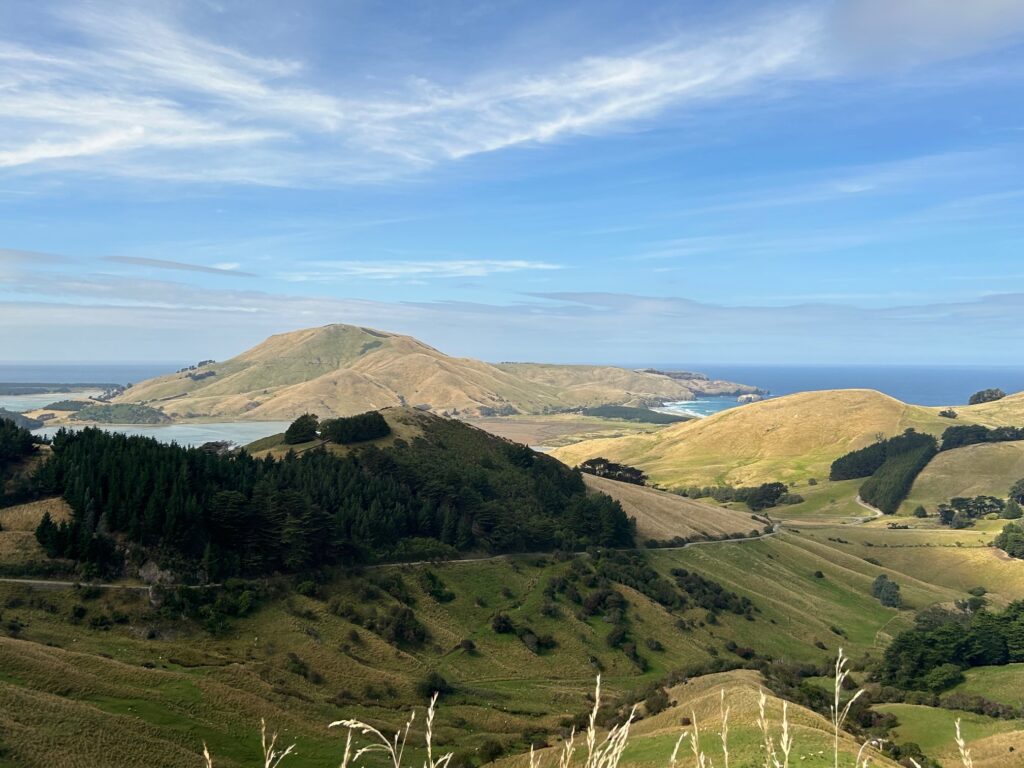
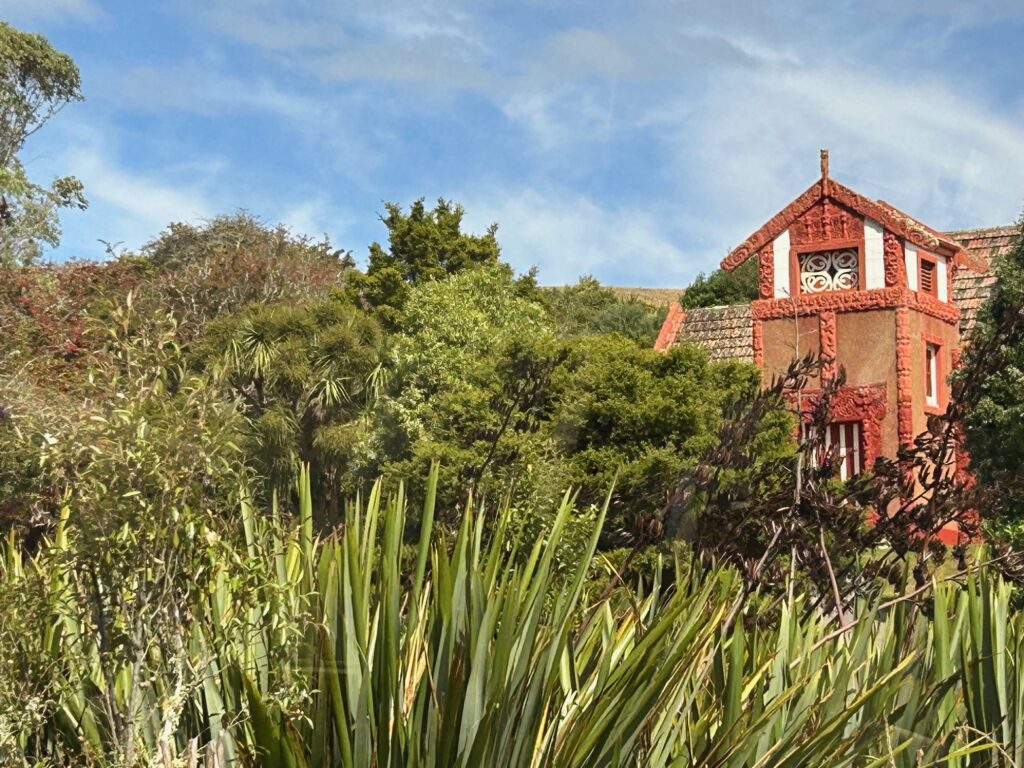
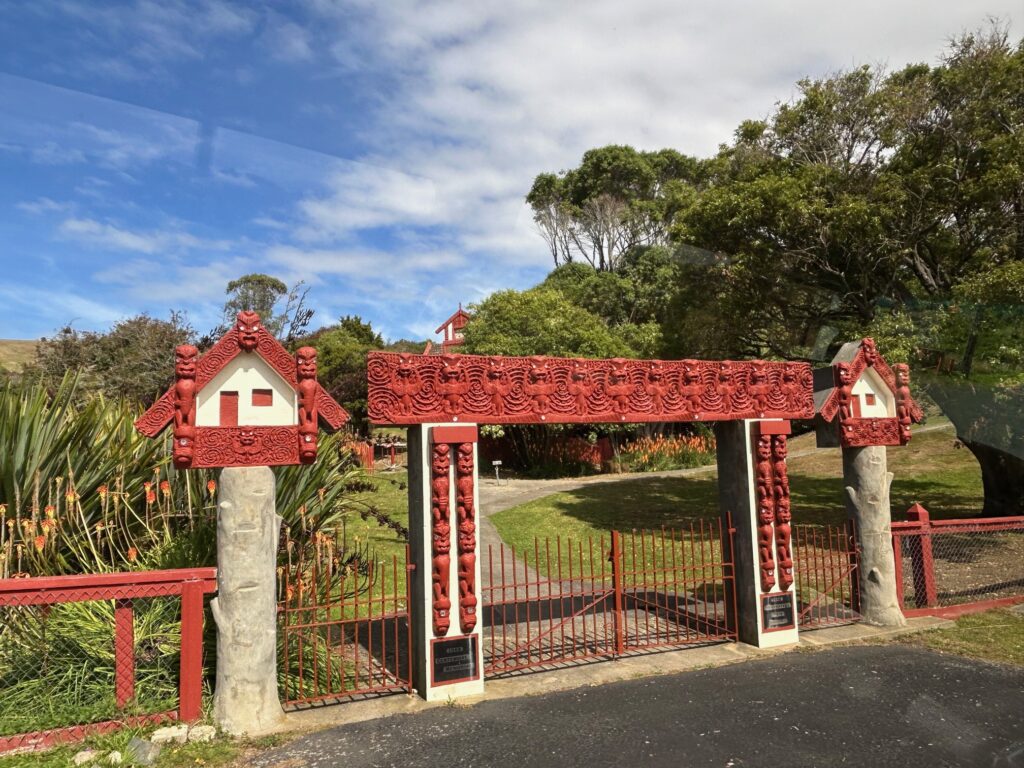
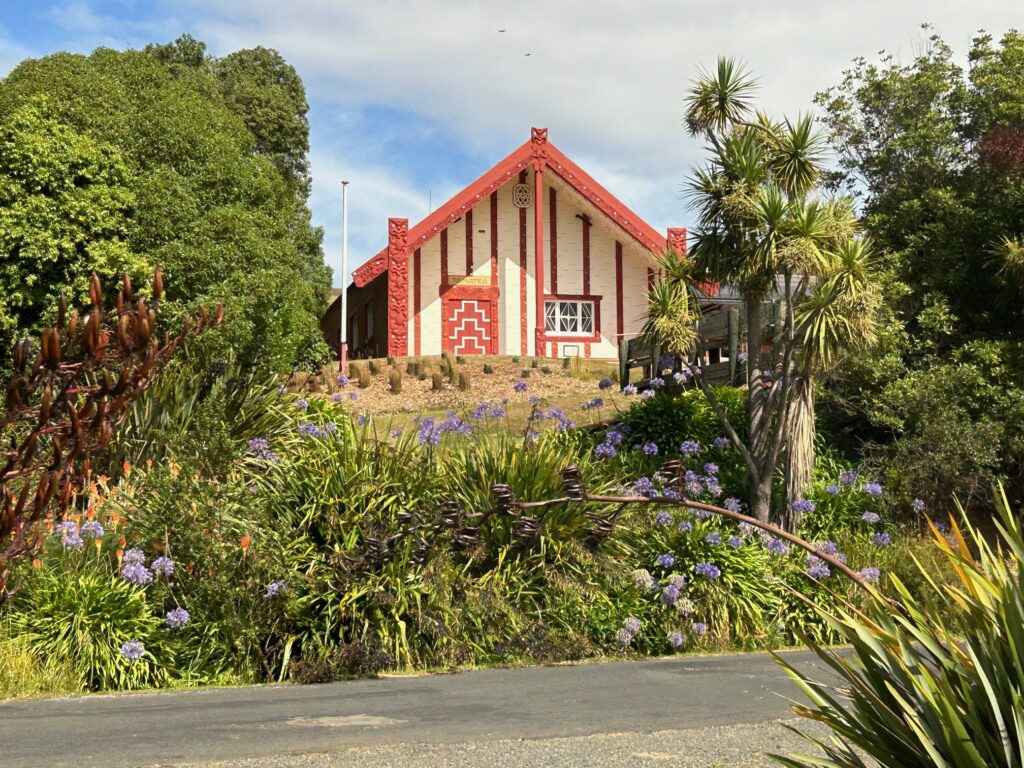
After the boat returned, it was into a minibus to transfer back to the campsite. However, it turned out the tour was not over as the driver took us around the Otago peninsula facing Dunedin to see the views – stunning again – and a Maori house.
Our driver also told us about Alexander Aitken – he was a brilliant mathematician from Dunedin, who went to Gallipoli and then the Somme in the First World War, smuggling his violin over with him. He was a master of mental arithmetic and specialised in performing difficult calculations. This skill saved his life on the Somme when, badly wounded and trapped in no-man’s-land, he noticed a regular pattern in the German shelling and worked out when it would hit the area he was lying in. The violin he carried at Gallipoli and on the Western Front is now a treasured artefact at Otago Boys’ High School.
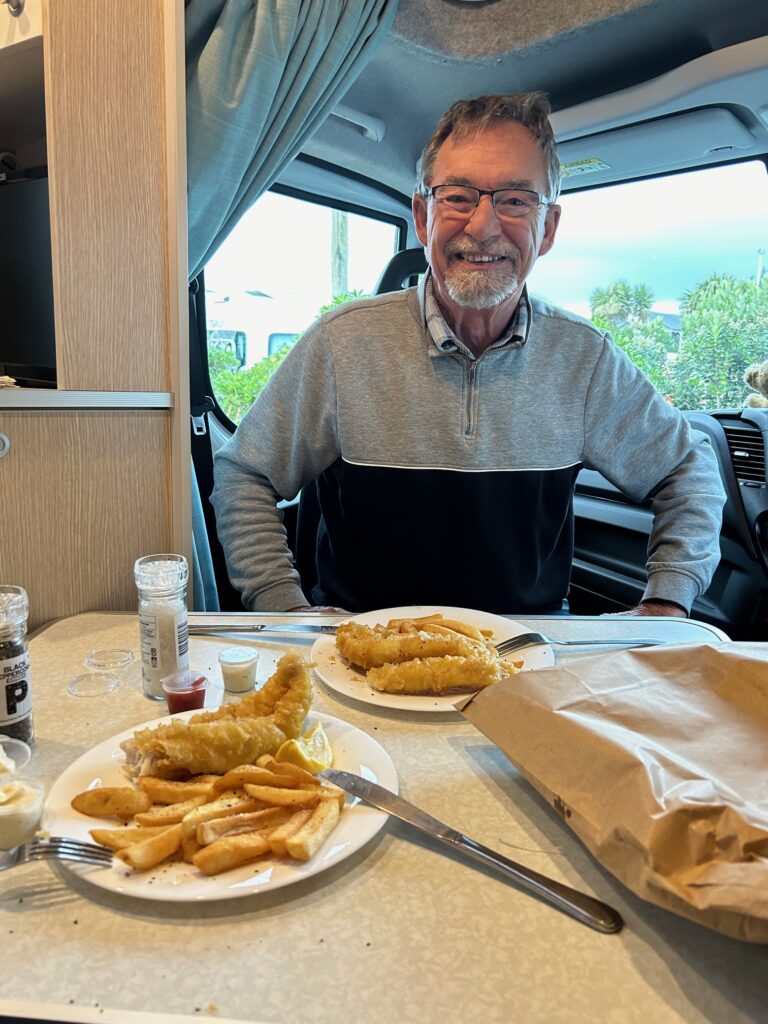
We returned to the campsite and B was thrilled to find out that we could get good old fashioned take away British fish and chips at the site cafe. We managed to cram our outside table into the front area of the van and hey ho – dinner was served!